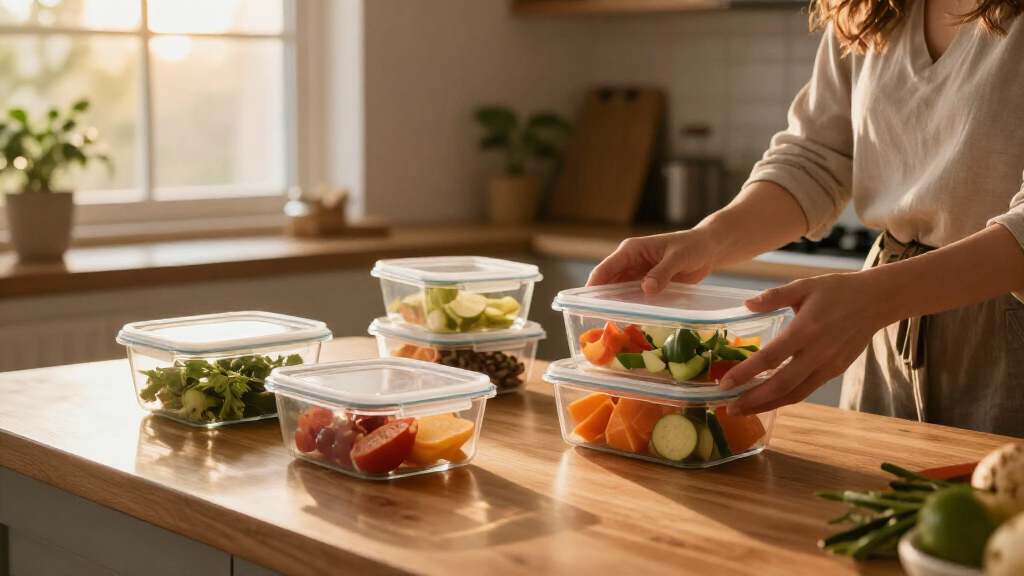

Choosing food storage containers for health usually means weighing concerns about food-contact materials against everyday convenience. Glass and plastic can both be useful when they are intact and used as directed, but they behave differently around heat, stains, odors and rough handling. Glass is nonporous and generally suited to reheating when the container is labeled for that use; plastic is lighter, easier to carry and often cheaper, but some products are not designed for high heat and can wear over time. The practical decision is whether you value a more heat-tolerant, long-lasting container or a light, low-cost set that is easy to transport. Choose glass if you mainly store leftovers at home and reheat in the same dish. Choose plastic if portability, low weight and lower replacement cost matter more, and you can follow its care instructions.

Vtopmart 8-Pack Glass Food Storage Containers with Lids (Green)
- ✔ Material: Borosilicate glass; plastic lids with silicone seals
- ✔ Set size: 8 containers
- ✔ Capacity range: 5 to 35.1 ounces
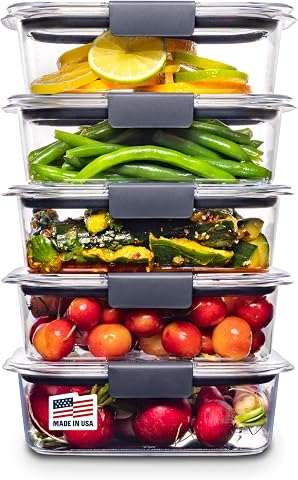
Rubbermaid Brilliance Plastic Food Storage Containers, 3.2-Cup, 5-Count
- ✔ Material: BPA-free Tritan plastic
- ✔ Set size: 5 containers with lids
- ✔ Capacity: 3.2 cups each

Bentgo Prep 20-Piece Meal Prep Container Set, 4-Cup, Mint
- ✔ Set contents: 10 trays and 10 lids
- ✔ Capacity: 4 cups per container
- ✔ Material: Food-safe; free of PFAS, BPA, vinyl, lead, and PVC
At a Glance
| Criteria | Glass food storage containers | Plastic food storage containers | Winner |
|---|---|---|---|
| Food-contact concerns | Nonporous glass does not absorb food colors or odors; use containers intended for food storage. | Food-safe plastic varies by type and intended use; follow the maker’s food and temperature guidance. | A |
| Heating and microwave use | Many glass containers are microwave safe, but check the label and avoid sudden temperature changes. | Only microwave plastic marked for that use; heat can deform unsuitable containers, and worn containers should be replaced. | A |
| Durability and wear | Can last for years if protected from impact; chips and cracks make a container unsuitable for food use. | Lightweight but more likely to scratch, stain, warp or retain odors with repeated use. | Depends |
| Weight and portability | Heavy and breakable, so less convenient for packed lunches and travel. | Light and convenient to carry; less likely to cause injury if dropped. | B |
| Cleaning and odor resistance | Usually resists stains and lingering smells; inspect lids and seals separately. | Can stain or hold odors, especially after storing strongly colored or aromatic foods. | A |
| Cost and long-term value | Higher initial cost in many sets, with good value when used carefully over time. | Usually less expensive upfront; replacement needs can reduce savings over time. | Depends |
Vtopmart 8-Pack Glass Food Storage Containers with Lids (Green)
Vtopmart ranks first for material and temperature flexibility. Its borosilicate glass containers are described as food-grade and BPA-free, and the set is rated for oven, microwave, freezer, and dishwasher use. That range makes it the most adaptable choice here for people who store leftovers and reheat them in the same container body. As with any set that uses plastic lids, we should remove the lids before oven or microwave heating and follow the product’s care guidance.The eight-piece assortment spans 5 to 35.1 ounces and combines square and rectangular shapes, so it can handle smaller portions as well as larger leftovers. Compared with Rubbermaid’s five identical 3.2-cup containers, that variety helps when our storage needs change from meal to meal. The silicone-sealed, four-hinge lids are described as airtight and leak-proof, which supports packed lunches, although the supplied notes say the snap locks can be difficult to operate.Glass is the meaningful tradeoff. It avoids using plastic as the container body, but it weighs more than the other options and may be less convenient to carry. Bentgo is easier to standardize for meal prep, while Vtopmart is better for a broader mix of storage and reheating tasks. We would choose Vtopmart when glass and oven compatibility matter more than low carry weight or identical meal portions.
Pros:
- Borosilicate glass bodies are specified as BPA-free and food-grade.
- Rated for oven, microwave, freezer, and dishwasher use.
- Eight containers in mixed shapes and capacities accommodate different portions.
- Silicone seals and four-hinge locks are designed to resist leaks.
Cons:
- Glass is heavier to carry than the plastic options in this comparison.
- Snap-lock lids may be difficult to open or close firmly.
Best for: People who want a versatile glass set for varied leftovers, batch cooking, and reheating.
Not ideal for: Anyone who prioritizes lightweight lunch containers or needs easy one-handed latches.
Bottom line: We rank Vtopmart first for buyers who want glass bodies and the broadest stated heating and storage range.
“We rank Vtopmart first for buyers who want glass bodies and the broadest stated heating and storage range.”
Rubbermaid Brilliance Plastic Food Storage Containers, 3.2-Cup, 5-Count
Rubbermaid Brilliance is the convenience pick for people who want lightweight containers with a consistent size and a lid designed for microwave use. Each of the five containers holds 3.2 cups, and built-in vents are intended to let steam escape while microwaving without removing the lid. That feature makes it distinct from Vtopmart, whose glass body offers oven use but whose plastic lid is not the part to heat.The bodies use BPA-free Tritan plastic, described as clear, stain-resistant, and odor-resistant. Its clip-on closures and leak-proof seals make the set useful for packing meals or storing liquids, while the matching rectangular format stacks neatly. Against Bentgo’s portion-oriented trays, Rubbermaid is better suited to general-purpose storage and reheating; Bentgo, however, explicitly lists more excluded materials and provides embossed measurements.The compromise is the container body. Rubbermaid is not the choice for oven heating, and buyers who specifically want food stored in glass may prefer Vtopmart. The latches can also be hard for some people to open. We would pick it when low carry weight and vented microwave convenience are priorities, provided Tritan plastic fits our material preferences.
Pros:
- BPA-free Tritan plastic is described as stain- and odor-resistant.
- Built-in vents support microwaving with the lid on.
- Leak-proof seals and clip latches help contain packed food.
- Five matching containers stack for orderly storage.
Cons:
- Plastic construction is not suitable for oven use.
- The clip-on latches may be difficult for some users to open.
Best for: People who pack and reheat same-size meals and value vented microwave use with the lid on.
Not ideal for: Buyers who want glass food-contact surfaces, oven-safe containers, or portion sizes that vary widely.
Bottom line: We recommend Rubbermaid for practical, lightweight storage and lidded microwave convenience when an oven-safe glass body is not needed.
“We recommend Rubbermaid for practical, lightweight storage and lidded microwave convenience when an oven-safe glass body is not needed.”
Bentgo Prep 20-Piece Meal Prep Container Set, 4-Cup, Mint
Bentgo Prep stands out for repeatable portions rather than all-purpose leftover storage. The set contains ten one-compartment, four-cup trays with embossed measurements and ten stackable clear lids. For someone preparing a week of similar lunches, that consistent format makes it easier to portion meals than Vtopmart’s mixed-size glass assortment or Rubbermaid’s five-container set.The stated material exclusions are unusually explicit in this lineup: the trays are described as free of PFAS, BPA, vinyl, lead, and PVC. They are microwave-, freezer-, and top-rack dishwasher-safe, but the instructions specify microwave use for trays only. That distinction matters in daily routines: unlike Rubbermaid’s vented lids, Bentgo lids should be removed for heating, then washed by hand. Vtopmart offers more flexible container-body heating and oven use, while Bentgo serves a narrower meal-prep purpose.Ten trays are useful when we prepare meals in batches, but the set is less suited to storing a changing variety of leftovers in different amounts. The lid care adds work, and the supplied details do not describe oven use. We would choose Bentgo when portion consistency and the listed material exclusions matter most, and skip it if we want glass, oven compatibility, or lids that go through the dishwasher.
Pros:
- Tray material is listed as free of PFAS, BPA, vinyl, lead, and PVC.
- Ten matching four-cup trays support batch meal prep.
- Embossed measurements help with portioning.
- Trays are microwave-, freezer-, and top-rack dishwasher-safe.
Cons:
- Lids require hand washing and are not intended for microwave use.
- One size and one-compartment format offer less flexibility for mixed leftovers.
- Oven safety is not specified in the supplied product details.
Best for: Meal preppers who want multiple same-size portions and clearly stated material exclusions.
Not ideal for: People who need oven-safe bodies, dishwasher-safe lids, or flexible capacities for varied leftovers.
Bottom line: Bentgo is the focused choice for portioned weekly meals, with lid care and heating limits to account for.
“Bentgo is the focused choice for portioned weekly meals, with lid care and heating limits to account for.”
As an Amazon Associate we earn from qualifying purchases.
Key Differences
For health-minded storage, neither material is automatically safe or unsafe in every situation. The product’s intended use matters: choose food-storage containers from a reputable maker, follow temperature limits, and do not use items that are cracked, badly scratched or warped. Glass has an advantage for people who regularly reheat leftovers because it tolerates heat well when labeled microwave safe and does not absorb food residue. It is also easy to inspect for damage and usually keeps tomato sauce and curry from leaving lasting stains.
Plastic’s strongest advantage is practical: it is light, portable and often inexpensive. That makes it a sensible option for lunches, picnics and households where containers are frequently carried around. The tradeoff is more attention to condition and heat instructions. Some plastics are not made for microwaving, and repeated heating or rough cleaning may shorten the useful life of a container. Glass sacrifices portability and can break, while plastic sacrifices some heat tolerance and resistance to staining and wear.
Price changes the decision only when matched to use. A pricier glass set can be worthwhile for home storage and reheating if it replaces repeated purchases and is handled carefully. A budget plastic set may be better value for travel or situations where breakage is likely. For many kitchens, a mix works well: glass for refrigerator leftovers and reheating, and food-safe plastic for packed meals that need to stay light.
Detailed Comparison
Food-contact concerns (Glass food storage containers wins — moderate)
Glass wins by a moderate margin for people seeking a material that does not absorb food residues, colors or odors. Glass is chemically stable under ordinary food-storage conditions, though lids, seals and coatings still need to be checked. Plastic products vary, so the user should follow the label and replace pieces that become damaged. This difference can simplify material choices, but it does not mean every plastic container is unsafe or every glass set is suitable for every use.
Heating and microwave use (Glass food storage containers wins — major)
Glass wins by a major margin for reheating leftovers, provided the container is labeled microwave safe. It generally handles microwave heat better than plastic and moves from storage to serving with little concern about staining. Plastic can still work when specifically marked for microwave use and used according to its instructions, but not all plastic containers qualify. Avoid heating food in disposable tubs or containers with unclear labeling.
Durability and wear (moderate difference)
This depends on the kind of damage most likely in your kitchen. Glass resists scratches, stains and odors, so it can remain pleasant to use for a long time, but a drop can chip or shatter it. Plastic handles drops better but can become scratched, stained or warped. The gap is moderate: glass suits careful home use; plastic suits rougher handling if you are willing to replace worn pieces.
Weight and portability (Plastic food storage containers wins — major)
Plastic wins by a major margin. It is easier to carry in a work bag, backpack or child’s lunchbox, and it is less hazardous if dropped. Glass is noticeably heavier and breakable, making it inconvenient for commutes and outdoor meals. If containers mostly stay in the refrigerator, this matters little; for packed meals, the difference is immediate.
Cleaning and odor resistance (Glass food storage containers wins — moderate)
Glass wins by a moderate margin. Its smooth, nonporous surface is generally easier to clean after oily, strongly colored or aromatic foods. Plastic can retain tomato stains, curry color or lingering smells, especially as it accumulates scratches. Lids on either material may collect residue around seals, so check whether they can be taken apart and cleaned fully.
Cost and long-term value (moderate difference)
There is no universal winner. Plastic usually costs less at checkout and makes financial sense when weight and low replacement cost matter. Glass often costs more initially, but durable pieces can deliver better value for frequent home storage and reheating. The difference is moderate and depends on breakage, replacement frequency and whether you actually use the containers regularly.
Glass food storage containers: Pros and Cons
Pros:
- Resists stains and lingering food odors
- A strong choice for microwave reheating when labeled safe
- Easy to inspect for cracks and residue
- Can provide long service in careful home use
Cons:
- Heavy to carry
- Can chip or break if dropped
- Often costs more upfront
- Not all glass containers tolerate sudden temperature changes
Plastic food storage containers: Pros and Cons
Pros:
- Lightweight and convenient for packed meals
- Usually less expensive to buy
- Less likely to break when dropped
- Available in many sizes and shapes
Cons:
- Some products are not intended for microwave or hot food
- Can stain, scratch, warp or hold odors
- Needs replacement when visibly worn or damaged
- Product labels and temperature limits require attention
Who Should Choose What
Choose Glass food storage containers if:
- You store leftovers at home and often reheat them in the same container.
- You want containers that resist stains and odors from tomato, spices or oily foods.
- You are comfortable handling heavier containers carefully and paying more upfront.
Choose Plastic food storage containers if:
- You carry lunch or snacks and keeping your bag light matters.
- You need lower-cost containers that can handle everyday bumps and drops.
- You will follow the product’s heat limits and replace pieces once scratched, warped or otherwise damaged.
Skip both if: If you need containers for hot food but cannot confirm their food-contact and temperature labeling, choose a clearly labeled product before storing or heating meals.
Value for Money
Paying more for glass is worthwhile for people who repeatedly store and reheat meals at home, value stain resistance, and expect to use the same containers for years. Its upfront price buys convenience and a surface that is easy to clean, but only if the containers are handled carefully; frequent breakage erases the value. Plastic is the better value for lunches, travel and households where low weight or a low purchase price matters most. Choose food-safe products with clear temperature guidance, and treat visible wear as a reason to replace them. For a mixed routine, buying a small glass set for leftovers and a few plastic pieces for travel can avoid paying for features you do not need across every container.
Final Verdict
For a health-focused home kitchen where containers regularly hold leftovers and go into the microwave, glass is the stronger default. It is more heat tolerant when labeled for microwave use, resists stains and odors, and makes it easier to keep storage surfaces in good condition. Choose plastic if portability and low cost matter more, particularly for lunches and travel, and select products specifically intended for the foods and temperatures involved. The deciding factor is how you use the containers: glass for home storage and reheating; plastic for lightweight transport. If both are part of your routine, a small set of each offers the clearest value.
Frequently Asked Questions
Are glass food containers healthier than plastic?
Glass avoids some concerns associated with heating unsuitable or damaged plastic and does not absorb food colors or odors. A food-safe plastic container used as labeled can also be appropriate for storage. Material, product labeling, condition and temperature all matter.
Can I microwave food in plastic containers?
Only microwave plastic containers marked for that use, and follow the temperature and care directions. Do not use disposable takeout tubs or containers that are warped, cracked or badly scratched for reheating.
Is glass worth the higher price?
Usually for people who store and reheat food at home, want stain resistance and will handle the containers carefully. Plastic is generally better value for light transport or situations where breakage is likely.
Should I replace scratched plastic food containers?
Replace containers that are deeply scratched, warped, cracked or otherwise damaged, and follow the maker’s care guidance. Wear can make them harder to clean and may mean they no longer function as intended.