
TL;DR
Food storage containers for health work best when you match the material to the food and use, follow the maker’s heating and cleaning directions, and refrigerate perishable food promptly. Glass, stainless steel, and food-grade plastic each have useful roles; no material replaces clean handling, cold storage, and checking leftovers.
A sturdy container can keep yesterday’s tomato sauce from leaking across your lunch bag, but it cannot make food safe after it sat warm on the counter all afternoon. Food storage containers for health matter because material, temperature, cleanliness, and the food itself all shape how you store leftovers.
This guide explains how to choose between glass, stainless steel, and plastic, when labels matter, and how to handle leftovers without turning your fridge into a mystery box. You’ll also get practical steps for cooling, dating, and cleaning food storage containers, plus clear answers about BPA, microwaving, and scratched plastic.
Choose glass, stainless steel, or food-grade plastic according to the food, temperature, and task.
Heat food in plastic only when the container is specifically labeled microwave-safe.
Refrigerate perishable food within two hours, or one hour above 90°F (32°C), and keep the refrigerator at 40°F (4°C) or colder.
Divide large hot dishes into shallow containers, date leftovers, and use most cooked leftovers within three to four days when properly refrigerated.
Wash lids and seals thoroughly, and replace containers that are cracked, badly scratched, or warped.
Choose a container that fits the food and the job
Food storage containers for health are food grade vessels in good condition that suit the food, temperature, and storage task. This match matters because storage and reheating put different demands on a container: a box that safely holds a cold lunch may not tolerate microwave heat, and a dish that withstands heat may still be awkward or unsafe to move straight from freezer to oven. Check the maker’s directions before putting a container in the microwave, freezer, dishwasher, or in contact with hot food.
Glass is easy to inspect, does not absorb food odors or stains, and often handles repeated washing well. Those qualities make it useful for leftovers you want to identify or reheat, though its weight and risk of cracking during sudden temperature changes can make it less convenient for a packed bag. Stainless steel is durable and useful for snacks or chilled lunches, but it is generally opaque and not microwave-safe; you may need to transfer food to another dish to reheat it. Plastic is light and convenient, though its intended use and condition deserve closer attention because heat tolerance varies by product and wear can make cleaning harder.
For example, if you pack a lemony chickpea salad, a glass container makes it easy to see what’s inside and resists lingering tomato stains. If you pack apple slices for a school bag, a food-grade plastic box may be lighter and easier to carry. These are practical trade-offs rather than a ranking of materials: match the container to the food and task, then check the label. “Reusable” alone doesn’t tell you whether it is microwave-safe.
Acidic or salty foods can interact with some metals and uncoated materials, potentially affecting the food or the container. Use a container intended for that food and follow its care guidance. The container is a tool, like a raincoat: useful for the conditions it was made for, but not a universal shield.
Use plastic by following its label and checking its condition
Food storage containers for health made of plastic should be labeled for food contact and used as the manufacturer directs. Heat food only in containers specifically marked microwave-safe; a takeout tub or a container with no heating instructions may not be designed for that job. Microwave-safe labeling indicates intended use under specified conditions, so follow any limits on time, temperature, or lid use rather than treating the label as permission for every heating situation. “BPA-free” means the product does not contain BPA, but that label alone does not prove the product is safer in every respect.
Plastic suits many everyday jobs because it is light, stackable, and less likely than glass to break when dropped. Those conveniences can make it more likely to be used for packed meals and everyday leftovers. The trade-off is that plastic can stain, warp, or scratch, and damaged surfaces or distorted lids may be harder to clean or close reliably. If your old container has deep grooves that hold food residue, a lid that no longer fits, or a shape changed by heat, replace it. A quick check after washing helps you notice damage before packing a saucy lunch.
Research has detected microplastics in foods and drinks, but the health effects of typical dietary exposure remain uncertain. Detection by itself does not establish how much exposure comes from a particular container or what that exposure means for health. The evidence does not support claiming that ordinary use of plastic food containers has been proven to cause a particular disease. You can still take a sensible step: move leftovers to a microwave-safe glass or ceramic dish before reheating if you are unsure of a plastic container’s label.
Marketing terms can sound like a shortcut. “BPA-free” is a specific claim about BPA, not a blanket guarantee about every material or use. Regulations also vary by country and product, so check current guidance from your national food-safety authority if you need information about a particular chemical or item.
Cool leftovers quickly and keep raw foods away from ready-to-eat meals
Food storage containers for health support safe habits when you use them to cool, cover, and separate food. Time and temperature matter because bacteria can grow when perishable food stays warm; putting it away promptly limits that time, while a cold refrigerator slows growth. Refrigerate perishable food within two hours, or within one hour if the air temperature is above 90°F (32°C). Keep the refrigerator at or below 40°F (4°C) and the freezer at 0°F (−18°C).
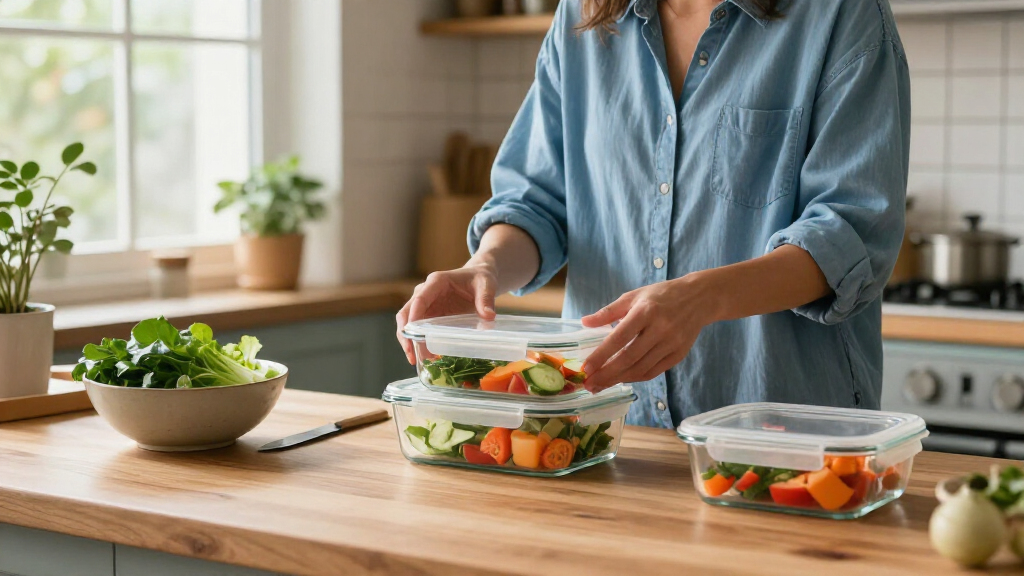
Large pots of soup or stew hold heat in the center, so divide them among shallow containers before chilling. More surface area and smaller portions let heat escape faster, which helps the food cool without a long wait in the warm range. Think of a shallow container as a wide, open road for heat to leave; a deep stockpot is more like a crowded tunnel. For example, after Sunday meal prep, split a large batch of chili into smaller portions. The containers cool more quickly, and you can grab one lunch at a time.
Use sealed containers to reduce spills, drying, odor transfer, and the chance of food contacting other items. But an airtight lid does not make food shelf-stable or erase time spent warm. Store raw meat, poultry, and seafood sealed on a shelf below ready-to-eat foods, so drips cannot fall onto salad greens or cooked rice. This separation matters because ready-to-eat food may be eaten without another cooking step to kill germs transferred from raw ingredients. If you use one container for raw chicken and later for vegetables, wash it thoroughly first.
These are the key points for safe storage: clean hands and utensils, prompt refrigeration, cold enough temperatures, and separation of raw and ready-to-eat foods. Containers help preserve food quality, but safe handling does the heavy lifting. For instance, a beautifully sealed container of rice still needs prompt chilling and sensible leftover timing.
Follow five steps to store leftovers with less guesswork
Food storage containers for health are most useful when you pair them with a repeatable routine: portion the food, chill it promptly, label it, and use it within a sensible time. The sequence matters: portioning speeds cooling, prompt chilling limits time at warm temperatures, and a date gives you a record when smell and appearance cannot reliably tell you how long food has been stored. Many cooked leftovers are best used within three to four days when refrigerated properly; freeze food for longer storage. A date on the lid helps you avoid the “Was this Tuesday’s pasta or last week’s?” guessing game.
- Portion large batches: Divide hot dishes into shallow containers instead of leaving a big pot to cool on the counter. Smaller portions cool faster and are easier to use one at a time.
- Refrigerate promptly: Get perishable food into a refrigerator set to 40°F (4°C) or colder within the recommended time. The container helps organize the food, while the refrigerator’s temperature slows bacterial growth.
- Seal and label: Close the lid to guard against spills and drying, then write the date on a removable label or tape. A date makes the storage timeline visible to everyone sharing the fridge.
- Choose a use-by plan: Eat refrigerated cooked leftovers within three to four days, or freeze portions for later. Freezing is useful when you already know you will not eat a portion in that window.
- Wash every part: Clean the container and lid with hot, soapy water, or use the dishwasher if the maker says it is dishwasher-safe. Check seals and crevices where residue can hide, since a clean-looking bowl can still have food caught around its lid.
Imagine packing a week of lunches on Sunday. Put Monday’s portion in the fridge and freeze the later portions; move one to the refrigerator the night before you need it. This reduces the time those later meals spend in the fridge before you eat them and gives you a clear routine without asking one container to do the work of time and temperature.
Never use a container that held cleaning products, paint, or other non-food substances for food storage, even after washing. Such materials may leave residues that ordinary washing cannot reliably remove. Use only containers made for food, and discard items that are badly damaged or impossible to clean well.
Choose materials by weighing everyday trade-offs
Food storage containers for health do not have one universally best material; the right choice depends on the food, temperature, portability, and condition of the container. A material’s everyday advantages also come with practical costs: glass is easy to see through and resists odors but is heavy and can break, stainless steel is durable but usually cannot go in the microwave, and food-grade plastic is light but needs careful attention to its heating label and wear.
| Material | Useful for | Check before use |
|---|---|---|
| Glass | Leftovers, visible portions, foods that stain | Freezer and temperature-change guidance; check for chips or cracks |
| Stainless steel | Durable snack and lunch storage | Food compatibility, lid condition, and no microwave use |
| Food-grade plastic | Lightweight packing and stackable storage | Food-contact labeling, heating instructions, warping, and deep scratches |
For example, a glass dish may be convenient for reheating yesterday’s baked pasta, while a stainless steel container can carry crackers without adding much bulk to a backpack. If you pack a hot, oily, or acidic dish, follow the product instructions and choose a material intended for that use rather than assuming all containers behave alike. A container that saves weight on a commute may be less convenient if it requires transferring food before reheating.
Reusable containers can reduce disposable packaging, though durable options may weigh more and require washing after each use. That means the best practical set often includes a few options for different routines, rather than a single material that is awkward for some jobs. Health depends on material, food, temperature, condition, and cleaning, not on a marketing label like “plastic-free” by itself. Think of your cupboard as a small toolkit: a few suitable options can handle different meals better than one container you use for everything.
Know what container claims can and cannot tell you
Food storage containers for health can reduce mess and help keep food in good condition, but a label or lid cannot guarantee that every storage choice is safe. “Airtight” describes how well a container closes; it does not mean the food can sit at room temperature indefinitely. “BPA-free” describes the absence of one chemical, not a full assessment of every possible material or use. These claims answer narrow questions about a feature or ingredient, while safe storage also depends on how the container is used and how the food is handled.
Public attention has shifted toward specific substances, including BPA and PFAS, and rules differ across countries and product categories. A broad claim on packaging may not explain which parts of a product it covers or what conditions apply. If you are considering a specific product or chemical, check current information from the relevant food-safety or consumer-protection authority. That keeps a broad marketing claim from standing in for product-specific guidance.
For instance, you might buy a container advertised as leakproof for soup. That feature can help keep broth off your bag, but it does not tell you whether the container can be heated or whether the soup was chilled promptly. The lid’s seal also needs washing, since residue there can affect cleanliness and prevent a good fit. An attractive label cannot repair a cracked rim or make a non-microwave-safe tub suitable for reheating.
The same measured approach applies to emerging microplastics research. Scientists have detected tiny plastic particles in some foods and beverages, while the health effects of typical dietary exposure remain uncertain. Detection is a reason for continued study, but it does not by itself show that a particular container is harmful in normal use. Avoid unnecessary heating of plastic and follow product directions as practical habits; avoid turning uncertainty into a claim that a particular container is known to cause disease.
Frequently Asked Questions
Which is healthiest for food storage: glass, plastic, or stainless steel?
No one material is best for every task. Glass is easy to inspect and resists odors, stainless steel is durable but usually not microwave-safe, and food-grade plastic is light when used according to its label. Choose based on the food, temperature, and container condition.
Is it safe to microwave food in plastic containers?
Microwave food in plastic only when the container is specifically labeled microwave-safe and the maker’s directions allow it. If the label is missing or unclear, transfer the food to microwave-safe glass or ceramic before heating.
Does BPA-free mean a container is completely safe?
No. BPA-free means BPA is absent; it does not establish that a product is safer in every respect or suitable for every use. Check the food-contact and heating instructions, and use the container as directed.
When should I replace a plastic food container?
Replace it if it is cracked, badly scratched, warped, or has damage that makes it hard to clean or close securely. For example, deep grooves around the bottom may trap residue even after washing.
How long can cooked leftovers stay in the refrigerator?
Many cooked leftovers are best used within three to four days when refrigerated properly. Date them when you store them, keep the refrigerator at or below 40°F (4°C), and freeze portions you plan to keep longer.
Do airtight containers keep food safe longer?
A tight lid can help limit spills, drying, odor transfer, and contamination, but it does not make food shelf-stable or replace refrigeration. Chill perishable food promptly and follow safe storage times even when the lid seals well.
Conclusion
Pick containers that match how you actually cook, pack, and reheat food, then keep them clean and in good condition. Prompt chilling, safe temperatures, and clean handling matter at least as much as the material on your shelf.
Put a date on the leftovers, close the lid, and let your containers do their part: keeping tomorrow’s lunch tidy, fresh, and ready to go.