
Set up a fitness band, pair it with your phone, and start recording activity, heart rate, and sleep. This guide is for first-time users who have a compatible band and smartphone. Allow about 30-45 minutes for setup and practice, plus charging time if the band arrives with a low battery.

Google Fitbit Air – Screenless Activity Tracker, Obsidian
- ✔ Battery life: Up to 7 days
- ✔ Quick charging: 1 day of battery in 5 minutes
- ✔ Water resistance: 50 meters

WHOOP 5.0 Screenless Fitness, Health & Sleep Wearable (12-Month Membership)
- ✔ Membership: 12-month WHOOP Peak membership included
- ✔ Battery life: 14+ days
- ✔ Charging: Waterproof wireless PowerPack; on-wrist charging

Screenless Fitness Tracker Smart Band, Sleep, HRV, Heart Rate, SpO2
- ✔ Battery life: 20–30 days (180 mAh)
- ✔ Charging: Magnetic charger; approximately 2 hours
- ✔ Weight: 25 g
Difficulty: Beginner | Time: 30-45 minutes, plus time for the first full charge
What You’ll Need
Tools & Materials:
- Fitness band and its charging cable or dock
- Compatible iPhone or Android phone
- Internet connection for app download and account setup
- Manufacturer’s companion app
Knowledge:
- Basic ability to install an app and use Bluetooth settings
- Access to the phone’s app store and, if required, an email address for an account
Check the band’s packaging or manufacturer support page for phone compatibility and the correct companion app. Some bands require a manufacturer account, location permission for phone features, or a specific phone operating system version. A fitness band estimates activity and wellness measurements; it is not a medical diagnostic device.
Google Fitbit Air – Screenless Activity Tracker, Obsidian
For a broadly useful health tracker fitness band, Fitbit Air makes the most balanced case. It pairs continuous health monitoring with a micro-adjustable Performance Loop Band, so we can fine-tune the fit for a day that includes work, a workout and sleep. Its 50-meter water resistance gives it a clearer swimming use case than the other two models’ stated limits, and smartphone GPS can map outdoor activity without a screen on the band.Compared with QwatchPro, Fitbit Air offers less time between charges: its stated battery life is up to seven days, versus QwatchPro’s 20–30 days. Fast charging helps ease that gap, adding a stated day of battery in five minutes. WHOOP 5.0 is the more coaching-centered alternative, with more detailed sleep analysis and a longer battery life, but its 12-month membership requirement adds a commitment Fitbit Air doesn’t list in the supplied details.The screenless format keeps the band simple and unobtrusive, but it also means we need a phone to review data. Its listed compatibility starts at Android 11 or iOS 16.4, so older phones are a reason to look elsewhere. With a heart-rate monitor, SpO₂ and skin-temperature sensor among its listed hardware, Fitbit Air is a strong everyday choice for buyers who want a capable band without WHOOP’s membership structure or QwatchPro’s less established feature story.
Pros:
- 50-meter water resistance supports a wider range of swimming use than the other listed water limits.
- Micro-adjustable fit suits all-day wear, workouts and sleep.
- Fast charging is specified to add a day of battery in five minutes.
- Includes heart-rate, SpO₂ and skin-temperature sensors.
Cons:
- Seven-day battery life is shorter than the stated endurance of QwatchPro and WHOOP.
- Detailed readings require a connected phone because the band has no display.
- Requires Android 11 or iOS 16.4 or later.
Best for: Buyers who want an adjustable screenless tracker for everyday health monitoring, workouts and swimming, and have a compatible phone.
Not ideal for: People with older phones, anyone who wants a display for quick checks, or buyers prioritizing the longest interval between charges.
Bottom line: Fitbit Air is our most versatile pick for buyers who want a screenless band with a swimmer-friendly water rating and practical everyday tracking.
“Fitbit Air is our most versatile pick for buyers who want a screenless band with a swimmer-friendly water rating and practical everyday tracking.”
WHOOP 5.0 Screenless Fitness, Health & Sleep Wearable (12-Month Membership)
WHOOP 5.0 is the choice for people who want a tracker to interpret patterns as well as collect them. Its listed tools cover sleep stages, sleep need and consistency, alongside continuous measures such as heart rate, HRV, respiratory rate, SpO₂ and skin temperature. AI-driven coaching and a stated set of more than 140 health metrics make it the most analysis-focused band here. Buyers interested in connecting women’s health data with cycle, pregnancy or fertility tools also get a broader set of named integrations than the other options list.That depth comes with a tradeoff: this package includes a 12-month Peak membership, and the product description says a paid membership is required for full features. Fitbit Air is the simpler recommendation if we want useful health sensors without that commitment. WHOOP is more compelling when we specifically value coached interpretation and detailed sleep reports, rather than just a long list of metrics.Its 14-day-plus battery and waterproof wireless PowerPack reduce charging interruptions, and the PowerPack can charge the device on the wrist. That’s more frequent upkeep than QwatchPro’s stated 20–30 days, but longer than Fitbit Air’s seven days. The band itself remains screenless, and the supplied water detail for the PowerPack is IP68 up to 10 meters for two hours; buyers should distinguish that from Fitbit Air’s stated 50-meter rating. WHOOP suits data-oriented users prepared to use the app and membership, while casual buyers may find its coaching model more involved than they need.
Pros:
- Detailed sleep reporting includes stages, sleep need, debt, consistency and efficiency.
- Tracks a broad range of health measures, including HRV, respiratory rate and skin temperature.
- 14-day-plus battery life with a wireless PowerPack that charges on the wrist.
- Lists integrations including Apple Health, Google Health Connect, Natural Cycles, Withings, Peloton and Strava.
Cons:
- Full feature access requires a paid membership; this package includes a 12-month term.
- Screenless design means we need the app to view detailed data.
- The stated PowerPack water rating is more limited than Fitbit Air’s 50-meter rating.
Best for: People who want personalized coaching, detailed sleep reporting and broad health insights, and are comfortable with the included 12-month membership.
Not ideal for: Buyers seeking a straightforward tracker without a membership commitment, or those who want a built-in display or the longest stated battery life.
Bottom line: WHOOP 5.0 is the strongest fit for buyers who will use its coaching and sleep analysis enough to justify a membership-based experience.
“WHOOP 5.0 is the strongest fit for buyers who will use its coaching and sleep analysis enough to justify a membership-based experience.”
Screenless Fitness Tracker Smart Band, Sleep, HRV, Heart Rate, SpO2
QwatchPro has the clearest appeal for buyers who would rather charge less often and want many labeled workout modes. Its stated 20–30-day battery life is the longest in this group, and the 170-plus sport modes offer more variety on paper than the supplied descriptions for Fitbit Air or WHOOP. At 25 grams, with a nylon and silicone strap, it is also described as lightweight for workouts and overnight wear.Those advantages come with a more phone-dependent experience. QwatchPro has no built-in display, so checking detailed metrics means opening its companion app; GPS mapping also depends on a smartphone. Fitbit Air shares the screenless limitation but has a clearer listed water rating for swimming, while WHOOP provides more extensive sleep interpretation and coaching. QwatchPro’s strengths are breadth of modes and charging convenience rather than a comparable promise of guided analysis.It lists heart rate, SpO₂, HRV, stress, steps and sleep monitoring, plus vibration alerts and women’s health tracking. IP68 water resistance supports everyday exposure, but the description doesn’t give a depth-and-duration figure comparable to Fitbit Air’s 50-meter specification. The product information also cautions that readings are for reference and that firmware updates may be needed to maintain phone compatibility. This makes QwatchPro a sensible option for buyers who value long battery life and workout variety, provided they are comfortable relying on the app and checking compatibility.
Pros:
- Stated 20–30-day battery life is the longest in this comparison.
- 170-plus sport modes cover a broad range of activities.
- Lightweight 25-gram construction and IP68 water resistance suit everyday wear and workouts.
- Tracks heart rate, SpO₂, HRV, stress, steps and sleep.
Cons:
- No display; detailed data and smartphone-connected GPS depend on the app and phone.
- Water resistance is listed as IP68 without a depth-and-duration detail in the supplied specifications.
- The description notes that firmware updates may be needed to maintain compatibility.
Best for: People who want a lightweight screenless band with many sport modes and long stated battery life between charges.
Not ideal for: Swimmers who want a clearly stated depth rating, buyers who want on-band data, or anyone seeking extensive coaching and detailed sleep interpretation.
Bottom line: QwatchPro is the practical pick for sport-mode variety and fewer charging stops, with app dependence and less detailed coaching as the main compromises.
“QwatchPro is the practical pick for sport-mode variety and fewer charging stops, with app dependence and less detailed coaching as the main compromises.”
As an Amazon Associate we earn from qualifying purchases.
Before You Start
Charge the band before pairing if its battery is low. Keep the band and phone close together during setup, and turn on Bluetooth. Install only the companion app named by the manufacturer; similarly named apps may support different devices. If the band was previously used, check its instructions for how to remove an old phone pairing or reset it. A factory reset may erase unsynced records.
Step-by-Step Instructions
Step 1: Charge and power on the band
Connect the band to its supplied charger, aligning the contacts or magnetic connector as shown in the instructions. Leave it charging until the screen or indicator shows that it has power. Remove it from the charger and press its button or tap the screen as directed to wake it.
Tip:Use the supplied charger when possible. If the contacts look dirty, wipe them gently with a dry, soft cloth before charging.
Check: The display turns on or a status light appears, and the band responds to a button press or screen tap.
Step 2: Install the companion app
Open your phone’s official app store, search for the companion app listed by the band’s manufacturer, and install it. Open the app and sign in or create an account if requested. Review the account details and privacy settings before continuing.
Tip:Do not choose an app based only on a matching name. Confirm the developer and supported device in the manufacturer’s instructions.
Check: The app opens to its setup screen or a prompt to add a device.
Step 3: Pair the band with your phone
In the companion app, choose the option to add or set up a device, then select your band model. Follow the app’s pairing prompt. If a code appears on the band, confirm that the same code appears in the app or on the phone. Accept the pairing request and wait for setup to finish.
Tip:Start pairing from the companion app unless the manufacturer specifically instructs you to use the phone’s Bluetooth menu. Pairing directly in Bluetooth settings first can prevent the app from completing setup.
Check: The app lists the band as connected, and the band may show a confirmation symbol or message.
Step 4: Complete permissions and device updates
Respond to the app’s permission requests based on the features you want to use. Notifications require notification access; location access may be needed for route tracking or weather, depending on the device. If the app offers a firmware update, keep the band near the phone, maintain a reliable connection, and follow the on-screen instructions until the update finishes.
Tip:Do not switch off the band or close the app during a firmware update. You can review or change many phone permissions later in system settings.
Check: The app shows setup as complete, and any update finishes without an error message.
Step 5: Fit the band for daily wear
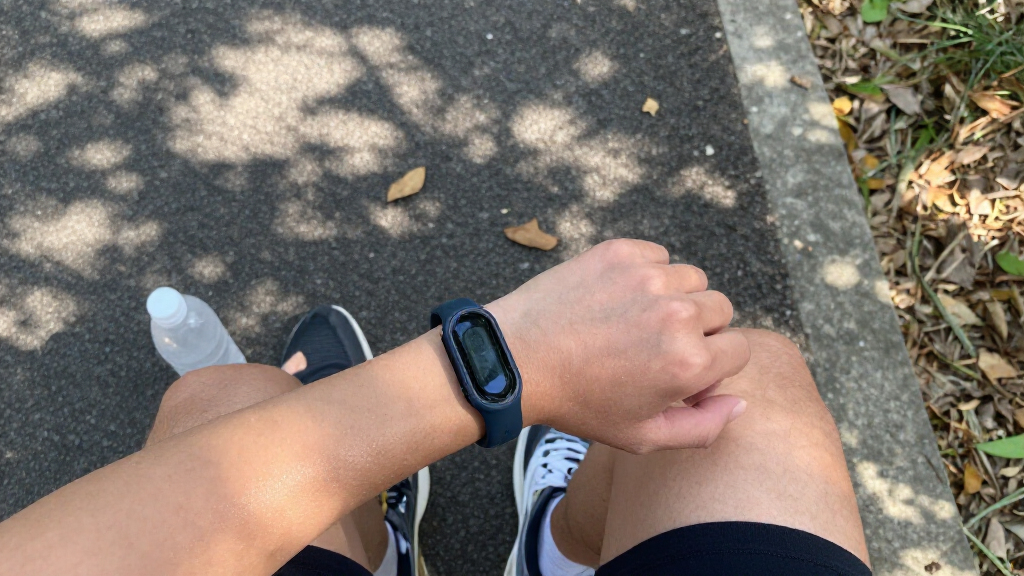
Fasten the band snugly on your wrist, leaving enough room to slide a finger beneath the strap. For heart-rate readings, position the sensor flat against the skin, a little above the wrist bone. Wear it on the wrist selected in the app, and choose the correct wrist setting if prompted.
Tip:A band that moves around may produce inconsistent readings. Avoid fastening it so tightly that it causes pain, numbness, or skin irritation.
Check: The band stays in place during ordinary movement, with its sensor touching your skin comfortably.
Step 6: Set your profile and tracking preferences
Enter requested details such as age, height, weight, preferred units, and usual wrist. These settings can affect estimates such as distance or calorie use. Choose which measurements and reminders to enable, then set a daily activity goal you can realistically follow. Enable sleep tracking if you want overnight records and the band supports it.
Tip:Some measurements or reminders use more battery. Begin with the features you plan to use, then adjust settings after you see how the battery performs.
Check: Your profile and selected goals appear in the app, and the band displays the chosen activity target if supported.
Step 7: Check the live connection and start tracking
Open the app and wait for the band to sync. Walk for a few minutes, then check whether the step count changes on the band or in the app. If your model has a workout mode, open it on the band or in the app before exercise and select the activity. Stop the session when the workout ends so its duration and measurements can be saved.
Tip:Step counts and activity estimates can differ from other devices. Use the same band consistently to follow your own patterns over time.
Check: The app updates after syncing, and a short test walk appears in the activity data or changes the displayed step count.
Step 8: Review records and establish a routine
After a day of wear, open the app and review the activity summary, available heart-rate readings, and sleep data if recorded. Check the date and sync status before interpreting a missing or partial record. Wear and sync the band regularly, charge it when needed, and use the app’s trend views to compare patterns across several days rather than relying on one reading.
Tip:Remove the band if it irritates your skin, and follow the manufacturer’s cleaning instructions after exercise or exposure to sweat.
Check: The app shows dated records from your wear period and a recent sync time.
Common Mistakes to Avoid
- Pairing the band from the phone’s Bluetooth menu before starting setup in the app. — Begin with the app’s add-device flow unless the manufacturer’s instructions say otherwise.
- Wearing the band loosely or over clothing, which can disrupt sensor readings. — Wear it snugly against clean, dry skin and position the sensor as the manufacturer directs.
- Treating estimated heart rate, sleep, or calorie figures as medical measurements. — Use the readings to follow general patterns, and speak with a health professional about symptoms or medical decisions.
- Expecting data to sync while the band is out of range or its battery is depleted. — Keep the band charged and near the phone, then open the app to sync after wear.
Troubleshooting
Problem: The app cannot find the band.
Solution: Charge and wake the band, keep it close to the phone, and confirm Bluetooth is on. Close and reopen the app, then retry its add-device flow. If the band was paired to another phone, remove that pairing or follow the manufacturer’s reset instructions.
Problem: The band appears connected, but the app has no recent data.
Solution: Open the companion app with the band nearby and allow it time to sync. Check that Bluetooth is on and that the app can run in the background if the phone restricts background activity. Confirm the date range shown in the app.
Problem: Heart-rate readings are missing or jump unexpectedly.
Solution: Move the band slightly above the wrist bone and tighten it enough to prevent sliding while keeping it comfortable. Clean and dry the sensor and skin, then wait for a fresh reading. Movement, fit, and device limitations can affect results.
Problem: The battery drains faster than expected.
Solution: Reduce optional features such as frequent notifications, continuous measurements, or always-on display if available. Check whether the screen brightness or workout tracking is set high, and install updates only while following the manufacturer’s charging guidance.
What Success Looks Like
The band remains paired in its companion app, shows a recent sync, and records a test walk or other activity. Your profile and goals are saved, and the band fits comfortably with its sensor against your skin. After regular wear, the app shows dated activity records and any other measurements your model supports.
Next Steps
Wear the band consistently for several days before using its trend views to compare activity or sleep patterns. Charge it before the battery runs out, clean it according to the manufacturer’s directions, and review app permissions when you change phones or tracking preferences. Contact the manufacturer’s support team if pairing repeatedly fails, the band will not charge, or its display shows a persistent error.
Frequently Asked Questions
Do I need a smartphone to use a fitness band?
Many bands can show basic information such as time or steps without a phone, but app setup and detailed records usually require a compatible smartphone. Check the product instructions for your model’s requirements.
Can I wear the band on either wrist?
Most bands can be worn on either wrist. Set the wrist in the companion app if that option is available, because it can affect how the device interprets movement.
Why does the band show a different step count from my phone?
Devices use different sensors and counting methods, and placement or movement can change estimates. Compare readings from the same band over time instead of expecting separate devices to match exactly.
Can a fitness band diagnose a health problem?
No. Consumer fitness bands provide estimates for general wellness and activity tracking. They do not replace medical tests or professional advice. Seek medical care for concerning symptoms.
How often should I sync the band?
Sync at least once a day or whenever you want to review recent records. Some bands sync automatically when they are near the phone, but opening the app can help start a delayed sync.