TL;DR
UTHealth Houston held a ribbon-cutting Oct. 22 for a replacement mobile clinic serving communities in Cameron and Hidalgo counties. The larger unit is expected to increase annual capacity from about 1,400 patients to approximately 2,500, while continuing free primary and preventive care.
UTHealth Houston held a ribbon-cutting ceremony Oct. 22 for a new mobile clinic serving the Lower Rio Grande Valley, replacing an aging unit with a vehicle more than twice its size. The university says the expanded clinic can serve approximately 2,500 patients annually, compared with about 1,400 through the previous unit, extending its free-care program in Cameron and Hidalgo counties.
UTHealth Houston said more than $550,000 was raised for the replacement through donations from individuals and organizations, along with matching funds from the university. The new vehicle was introduced at a community ceremony attended by academic, healthcare and local government representatives. The source report does not provide a breakdown of the funding or the clinic’s purchase and operating costs.
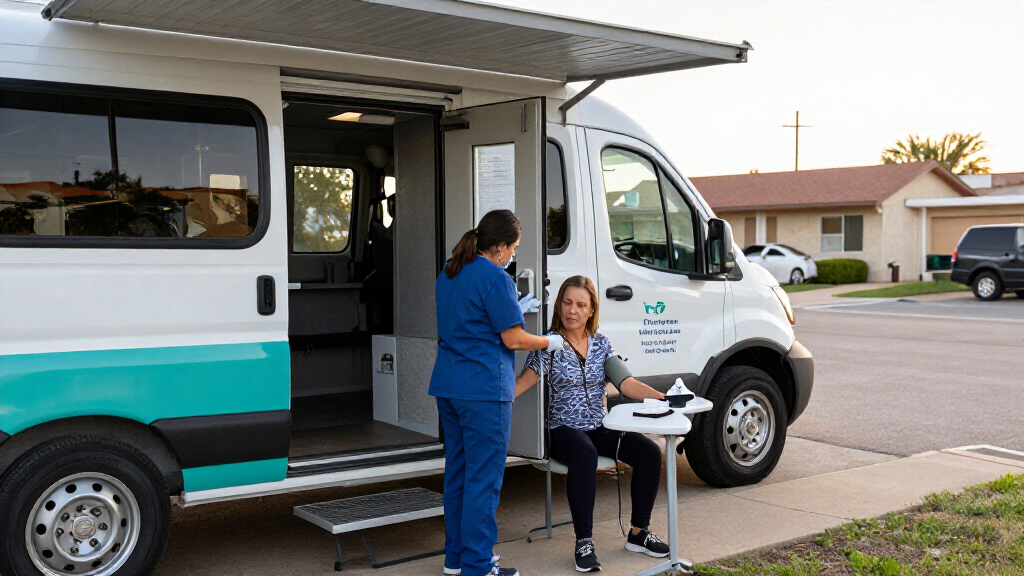
Run through the Department of Internal Medicine at McGovern Medical School, the clinic offers primary and preventive care to patients of all ages, including people without insurance or an established primary care provider. Services include routine examinations, treatment of minor illnesses, immunizations and screenings for conditions such as diabetes, high blood pressure and high cholesterol. The program also offers Pap smears and early cancer detection, according to UTHealth Houston.
The clinic works with local laboratories, imaging facilities and pharmacies to connect patients with diagnostic tests, medications and other low-cost services. When a patient needs specialized care, Houston-based faculty can consult through telemedicine, and the clinic can refer patients to local providers. UTHealth Houston says the unit rotates among locations on school and college properties that provide utilities and internet access.
More Visits and Broader Local Care
The larger unit is intended to increase the number of people the program can reach in a region where, according to UTHealth Houston, routine and specialized care can be difficult for some residents to access. Its stated annual capacity rises by about 1,100 patients, from 1,400 to approximately 2,500. Those figures describe projected service capacity; the university’s report does not say how many patients the new clinic has treated since its launch.
The service model combines screenings and basic care with referrals, local diagnostic partnerships and remote specialist consultations. That arrangement may help patients address health concerns without relying solely on emergency departments, although the source provides no measured data on changes in emergency-room use or health outcomes. The clinic’s role is therefore both direct care and connection to other services.
The added space also serves an educational purpose. UTHealth Houston says it will accommodate more fourth-year medical students and internal medicine residents for clinical work and training in cultural competency. The program also supports public-health research with the university’s School of Public Health in Brownsville. These activities place patient care, workforce preparation and research within the same regional program.
Four Decades of Valley Service
UTHealth Houston traces the mobile clinic program to 1986. For nearly four decades, it has provided medical services to residents along the Texas-Mexico border, with a focus on communities in Cameron and Hidalgo counties. The university says the program received a Texas County Award for outstanding healthcare delivery to border residents.
The new vehicle replaces an older mobile unit that served fewer patients. Its expanded size is the central change described in the announcement, but the clinic remains part of the same university-operated program. The care model depends on rotating through community sites and coordinating with local facilities rather than providing every diagnostic or specialist service inside the mobile clinic.
At the ceremony, UTHealth Houston President Melina R. Kibbe and clinical and translational sciences Vice President David D. McPherson spoke about access and the program’s purpose. Other attendees included University of Texas System Regent Nolan Perez, state Rep. Janie Lopez and mayors from Harlingen, San Benito and Brownsville, according to the report.
Capacity and Outcomes Still Unreported
The university’s announcement gives an estimated annual capacity of about 2,500 patients, but does not explain how that estimate was calculated or whether it refers to unique patients, visits or another measure. It also does not report a launch date for regular service at the new unit, a schedule of stops, or current patient totals.
Details about staffing levels, the number of additional students and residents expected to train in the vehicle, and the cost of ongoing operations were not provided in the source report. Nor does it include outcome data showing whether the expanded clinic has changed access, chronic disease management or emergency-room use. The clinic’s stated benefits and projected capacity should not be read as measured results.
Clinic Rotations and Service Growth
The mobile clinic is expected to continue rotating among school and college sites in the region, where host locations provide utilities and internet access. UTHealth Houston has not published a timetable for those stops in the source report. Patients seeking services will need current information from the university or local partners about locations, operating hours and appointment arrangements.
The university says the expanded vehicle will support care, medical training and public-health research. Further information on its first-year patient numbers, how many trainees use the unit and the range of services delivered at each stop would show how the added capacity is being used. No additional launch event or specific follow-up milestone was announced in the report.
Key Questions
Where will the mobile clinic serve patients?
The program serves communities in Cameron and Hidalgo counties in the Lower Rio Grande Valley. UTHealth Houston says the clinic rotates among school and college properties, but the source report does not list specific stops or dates.
What services does the clinic provide?
Services include primary and preventive care, routine examinations, treatment of minor illnesses, immunizations and screenings for conditions including diabetes, high blood pressure and high cholesterol. The clinic can also connect patients with local testing, pharmacies, referrals and telemedicine consultations with specialists.
Is care free?
UTHealth Houston describes the program as providing free medical care and says it serves people without insurance or an established primary care provider. Some tests, medications and other services arranged through local partners are described as low-cost; the report does not give a complete fee schedule.
How many patients can the new unit serve?
The university estimates annual capacity at approximately 2,500 patients, up from about 1,400 for the previous unit. It has not reported post-launch patient totals or explained whether the estimate counts people or visits.
Source: news-medical.net