TL;DR
Fit&Well published a yoga therapist’s seven-part seated movement sequence for older adults and people who find floor-based exercise difficult. The therapist says the gentle routine can leave participants feeling rested and uplifted, but the report does not provide clinical evidence that the sequence produces specific health outcomes.
Fit&Well has published a seven-part chair exercise sequence recommended by a yoga therapist who works with older adults, including people living with Parkinson’s disease, other movement disorders and chronic conditions. The routine is designed for people who prefer seated movement or cannot comfortably exercise on the floor, and the therapist says participants can adapt each movement to their own range and capacity.
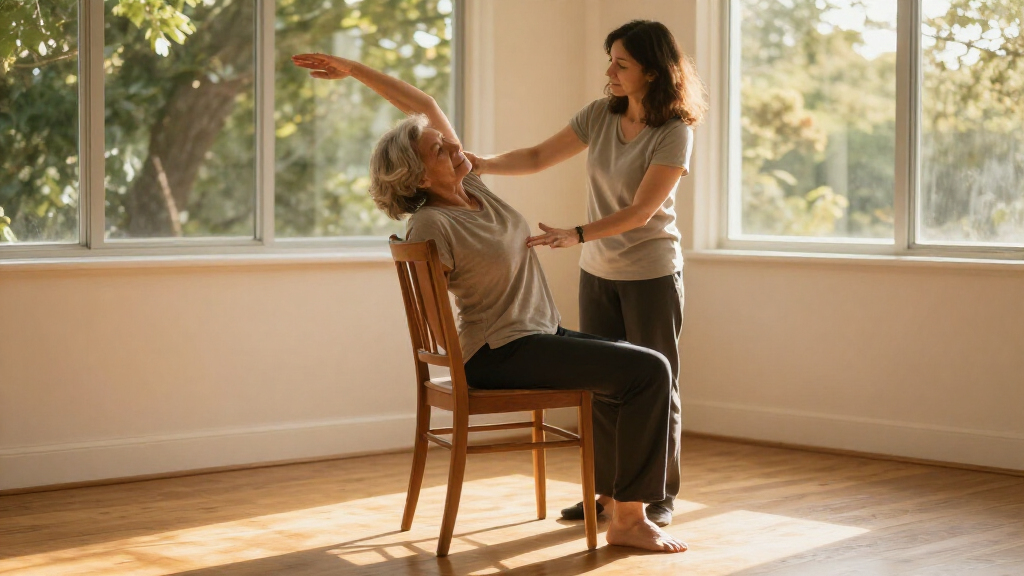
The sequence starts with a minute of sitting upright in a sturdy chair, feet flat on the floor, hands on the lap and attention on natural breathing. It then moves through an overhead arm sweep into prayer, seated torso twists, single- and double-arm raises, side bends, a seated cat-cow movement and a forward fold. The instructions specify small sets, generally three to five repetitions, with twists and side bends done on both sides.
The therapist links each movement to the breath: participants are generally instructed to inhale while raising or opening the body and exhale while lowering, twisting or folding. The article offers modifications for two exercises. During side bends, a participant who wants more stability can hold the side of the chair; during the forward fold, the hands can stay on the knees for added support.
The therapist advises moving within the body’s available range and capacity, rather than trying to reproduce a particular pose. The sequence calls for enough space to raise the arms and a chair that will remain steady. The report does not give a clinical trial, measured outcomes or a specific medical screening protocol for the routine.
A Seated Option for Gentle Movement
The routine offers a practical alternative for people who find floor-based yoga inaccessible or simply feel more comfortable exercising from a chair. Its structure is straightforward: it uses a chair, takes participants through several areas of movement, and includes breathing and posture cues without requiring a specific pose or level of flexibility.
That flexibility may make the instructions easier to adapt for people with limited mobility. The therapist says the aim is to explore movement that is accessible to each person, and describes participants as leaving class feeling more rested and uplifted. That is the therapist’s account of their experience, not a measured finding or a guarantee that everyone will feel the same effects.
Readers should distinguish the report’s practical exercise guidance from evidence of medical benefit. It does not establish that this sequence treats Parkinson’s disease or other conditions, prevents falls, or improves a particular health measure. People with health concerns or uncertainty about whether an exercise is suitable can seek guidance from a qualified health professional.
How the Seven Movements Are Structured
The therapist says chair-based yoga can be used by people who lack the mobility for floor exercise as well as those who are simply more at ease seated. The therapist’s work is mainly with older adults with movement disorders and chronic health conditions, so the postures described are gentle. The report presents the sequence as a seated flow that can be done wherever there is a suitable chair and room to move.
The progression begins by settling into the chair and noticing the breath, then adds upper-body movements. Arm arcs and raises involve reaching overhead; twists rotate the torso and head; side bends move the upper body laterally. Cat-cow alternates between lifting the chest and rounding the back, while the final forward fold brings the upper body toward the legs. The instructions use repetition counts rather than a timed workout, apart from the one-minute settling period.
The therapist emphasizes that there is no particular shape or position to achieve. That guidance frames the routine as an adaptable movement practice, not a test of flexibility or a standardized rehabilitation plan. The source does not say that the sequence was assessed in a formal study or endorsed by a medical organization.
“I encourage everyone to move within the range and capacity of their body—there’s no particular shape or position to achieve.”
— The yoga therapist quoted in Fit&Well
Evidence and Individual Suitability
The source material does not identify a publication date, provide the therapist’s name in the supplied text, or cite research testing this specific seven-movement sequence. It also does not quantify how participants responded or explain how the reported feelings of being rested and uplifted were assessed. Those descriptions should be understood as the therapist’s observations.
The article does not set out screening criteria or cover how to adapt every movement for different conditions, pain, balance concerns or range-of-motion limits. Although it recommends a sturdy chair and gives two support modifications, it does not establish that every exercise is appropriate for every reader. The extent of any health benefit remains unconfirmed in the supplied report.
Using the Routine With Care
The immediate next step for readers is to review the movement instructions and decide whether a seated sequence fits their abilities and surroundings. The report recommends a sturdy chair, space to raise the arms and movement within a comfortable personal range; it also suggests holding the chair during side bends or keeping hands on the knees during a forward fold for extra support.
The source announces no follow-up study, clinical evaluation or additional reporting milestone. Until further evidence or guidance is provided, the sequence remains a set of exercises recommended by a yoga therapist, not a validated treatment protocol. Readers with medical conditions or questions about safe movement can consult a qualified professional before trying unfamiliar exercises.
Key Questions
What exercises are included in the chair sequence?
It includes a one-minute settling exercise, an arm arc into prayer, seated twists, single- and double-arm raises, side bends, seated cat-cow and a forward fold.
Who is the routine intended for?
The therapist describes chair-based yoga for people who have difficulty with floor-based movement or prefer to exercise seated. The therapist’s groups include older adults with Parkinson’s disease, other movement disorders and chronic conditions.
How can the movements be made more supportive?
The report suggests holding the side of the chair during a side bend and placing the hands on the knees during the forward fold. It also advises staying within one’s own range and capacity.
Does the report show that the sequence treats a health condition?
No. The supplied report describes a therapist-recommended routine but does not present clinical research showing that it treats Parkinson’s disease or another condition, or produces a particular health outcome.
Source: fitandwell.com