TL;DR
Dartmouth Health and the Geisel School of Medicine plan to launch Dartmouth Health at Home in January 2027, backed by a $20 million gift from alumnus Richard “Dick” Levy. The pilot is expected to serve 10 to 20 patients, with plans to grow to more than 1,000 patients and their families annually over several years.
Dartmouth Health and the Geisel School of Medicine at Dartmouth are launching Dartmouth Health at Home, a home-based primary and palliative care program supported by a $20 million gift from Dartmouth alumnus Richard “Dick” Levy. The program is scheduled to begin with a small pilot in January 2027, with the health system aiming to expand service across New Hampshire and Vermont over several years.
The January pilot is expected to serve 10 to 20 patients. Dr. Nathan Goldstein, chair of Dartmouth Health’s department of medicine and a co-CEO of the program, told Home Health Care News that the organizations plan to grow it to serve more than 1,000 patients and their families annually. At full scale, the program is expected to employ about 30 clinicians and staff.
The planned services include in-home primary care and palliative care, supported by interdisciplinary teams. Goldstein said those teams will include physicians, advanced practice providers, social workers and home health aides, rather than relying on a single provider for a visit. They are expected to meet at least weekly to review patients’ care.
The initiative will also establish a Family Caregiver Institute at Dartmouth Health, offering caregivers services, education, support and access to home care aides. Dartmouth’s Institute for Health Policy & Clinical Practice will study how home-based services operate, what they cost and whether they can generate enough revenue to support the program over time.
Bringing Coordinated Care Into Homes
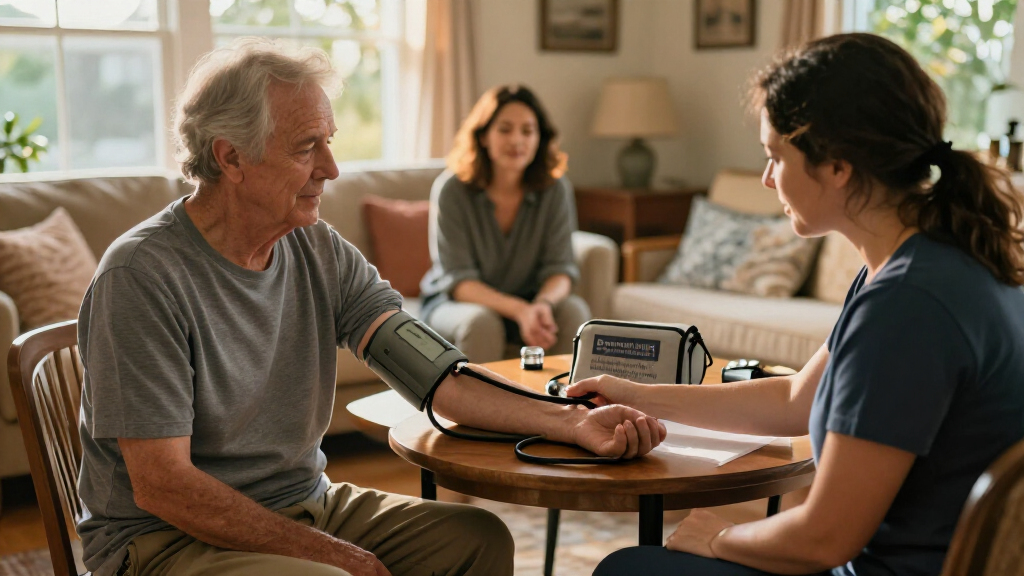
The program is designed for people who have difficulty reaching medical appointments, including older adults who are frail and may depend on relatives for transportation. Providing care at home could reduce the need for family members to take time off work to accompany loved ones to clinics, Goldstein told Home Health Care News.
Goldstein said clinicians visiting a patient’s home may be able to identify health or safety issues that are less visible in a clinic, including whether medications are being taken, whether food is available and whether the home has fall hazards. The program’s organizers expect earlier assessment and treatment could help prevent some conditions from progressing to emergencies, potentially reducing emergency visits and hospitalizations. Those are anticipated benefits, not outcomes established by the pilot.
For patients and caregivers, the proposed model combines medical care with social work, home support and caregiver resources. Its reach will depend on which patients qualify, how services are funded and whether the model can be delivered safely across a largely rural region.
As an affiliate, we earn on qualifying purchases.
A Rural Pilot With Expansion Plans
Dartmouth Health serves communities in New Hampshire and Vermont, where travel to clinics can be difficult for some patients. The new program is intended to move a coordinated range of services into patients’ homes, rather than requiring them to visit a Dartmouth Health facility for each service.
The health system plans to start locally and adjust the program using feedback from patients and caregivers, Goldstein said. Its longer-term goal is to expand across the two states and serve patients receiving care from Dartmouth Health. The stated ambition to develop a model that could be used in rural areas elsewhere remains a goal; no broader rollout or adoption timeline was provided in the report.
The $20 million donation is intended to help establish the program, but it is not described as permanent operating funding. The Dartmouth Institute will examine the costs, revenue and expected financial margin of home-based services, including whether the services can attract private and government payers.
As an affiliate, we earn on qualifying purchases.
Funding and Outcomes Still Unproven
The program has not yet begun, so its effects on patient outcomes, access and costs are not known. Dartmouth Health has described potential savings from earlier treatment and improved medication management, but the source report provides no measured results or financial projections showing those savings have occurred.
The $20 million gift can launch the initiative but, according to Goldstein, will not sustain it financially over the long term. The organizations have not disclosed a detailed operating budget, payer agreements, eligibility criteria, the specific mix of primary and palliative services, or how many patients will be added at each stage after the pilot.
It is also not clear when the program might reach more than 1,000 patients annually or whether it will ultimately be adopted beyond Dartmouth Health’s service area. The proposal to become a model for rural health systems nationally is an aspiration, not a confirmed expansion plan.
As an affiliate, we earn on qualifying purchases.
Pilot Begins in January 2027
Dartmouth Health and the Geisel School of Medicine plan to start the 10-to-20-patient pilot in January 2027. The program is expected to use patient and caregiver feedback to refine its services before expanding. No exact schedule for expansion has been announced.
As the pilot develops, the Dartmouth Institute is expected to assess the model’s costs, potential revenue and financial margin. Those findings, together with the care teams’ experience and patient feedback, will help determine whether the initiative can expand sustainably across New Hampshire and Vermont.
Further details to watch for include which patients will be enrolled, what services will be available in the initial pilot and how the program will be reimbursed. Dartmouth Health has not announced a date for releasing pilot results.
As an affiliate, we earn on qualifying purchases.
Key Questions
What is Dartmouth Health at Home?
It is a planned Dartmouth Health and Geisel School of Medicine program offering home-based primary and palliative care and related support services.
When will the program start?
The organizations plan to begin a pilot in January 2027, initially serving 10 to 20 patients.
Who is funding the initiative?
A $20 million gift from Dartmouth alumnus Richard “Dick” Levy is supporting the program’s launch. Dartmouth Health has said the donation will not sustain the program indefinitely.
How large could the program become?
Dartmouth Health aims to grow the program over several years to serve more than 1,000 patients and their families annually. At full scale, it is expected to have about 30 clinicians and staff. The expansion timetable has not been specified.
Will the program reduce costs or hospital visits?
Dartmouth Health expects that earlier treatment and better medication management could reduce some emergency visits, hospitalizations and costs. Those are projected benefits; the program has not yet produced results showing whether they will occur.
Source: rss