
TL;DR
A study published in The Lancet Oncology estimates that infections caused about 2.3 million of the 20 million cancer cases diagnosed worldwide in 2024. HPV, Helicobacter pylori, hepatitis B and Epstein-Barr virus accounted for roughly 92% of infection-attributable cases; prevention options vary, and vaccination remains uneven.
A global analysis published Sept. 28 in The Lancet Oncology estimates that infections caused about 2.3 million cancer cases in 2024, roughly 12% of the 20 million new cases recorded worldwide. The findings point to prevention—including vaccines against human papillomavirus (HPV) and hepatitis B—as one way to reduce some cancers, while showing that access to protection remains uneven.
Researchers assessed 12 cancer-associated pathogens, including viruses, bacteria and parasites. They combined estimates from the Global Cancer Observatory’s GLOBOCAN database with published research on infection prevalence among people with particular cancers to calculate how many cases could be attributed to each pathogen. The result is a population-level estimate, not a count of cases individually confirmed to have been caused by infection.
Four pathogens accounted for about 92% of infection-attributable cancers in the analysis. Helicobacter pylori, a bacterium that infects the gastrointestinal tract, was linked to an estimated 760,000 cases, mainly gastric cancers. HPV was associated with 750,000, including cervical, penile, throat and mouth cancers. Hepatitis B accounted for 360,000 cases, and Epstein-Barr virus (EBV) for 260,000, including some throat, stomach and blood cancers.
The burden is concentrated in lower- and middle-income countries, which accounted for 77% of infection-driven cases in the study. About 81% of HPV-linked cancers occurred in those countries. Separately, the World Health Organization reports that in 2024 only 31% of eligible adolescent girls worldwide had received at least one HPV vaccine dose, against a global target of 90%.
Prevention Could Reduce Infection-Linked Cancers
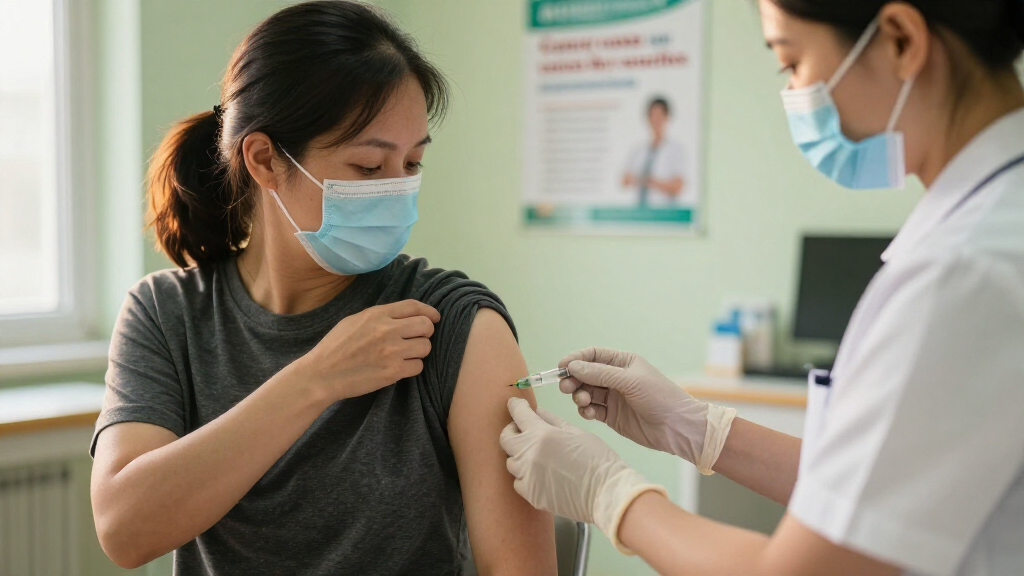
The findings put a number on a cancer burden that is partly preventable, though the study does not mean every infection-related cancer can be prevented with a vaccine. HPV and hepatitis B vaccines can prevent infections associated with several cancers. H. pylori and EBV require different prevention approaches, and no approved EBV vaccine is available, according to the source report.
Experts say the difference between estimated burden and vaccine coverage matters for public health planning. Dr. Prashant Mathur, director of India’s National Centre for Disease Informatics and Research, who was not involved in the study, said infection prevention could avert some cases alongside measures addressing other risks. He cited an estimate that 50% to 60% of cancers in India may be avoidable when factors including tobacco, alcohol, diet, physical activity and pollution are considered. That figure covers multiple risk factors, not infections alone.
Coverage gaps are especially consequential where most infection-attributable cases occur. Lower-cost vaccine delivery and reliable access to screening and health services may affect how much of the preventable burden can be reduced. The study identifies the scale and distribution of cases; it does not measure the impact of any particular vaccination campaign.
As an affiliate, we earn on qualifying purchases.
Four Pathogens Dominate the Estimate
The researchers’ estimates draw on cancer registry data and earlier studies of infections in people with specific cancers. The figures describe cases attributed to pathogens across populations, rather than proving the cause of each person’s cancer. The analysis covers cases diagnosed in 2024, so its totals should be read as estimates for that year, not as a forecast.
HPV vaccination has shown benefits in countries with high uptake, according to experts cited in the source report. Dr. Rebecca Perkins, an obstetrician-gynecologist at Tufts University School of Medicine who was not involved in the study, said countries that reached vaccination rates above 80% are seeing cervical cancer begin to disappear. She also cited research from Australia, England and Finland reporting no HPV-related cancers or deaths among young adults vaccinated by age 13. Those observations concern particular populations and studies, not a guarantee for every vaccinated person.
Hepatitis B also has a vaccine that can prevent infection and related cancers. EBV is different: infection is common, with up to 95% of people infected by adulthood, but most people do not develop an associated cancer. Tumor virologist Claire Shannon-Lowe of the University of Birmingham said vaccine development is complicated by the virus’s use of multiple proteins to enter cells and its ability to persist in the body.
“We have now achieved the critically important milestone of cervical cancer starting to disappear in countries that quickly achieved vaccination rates of over 80 percent.”
— Dr. Rebecca Perkins, Tufts University School of Medicine
As an affiliate, we earn on qualifying purchases.
Attribution and Prevention Limits
The study estimates how many cancers are attributable to infections based on combined datasets; it does not establish a pathogen as the cause of every individual case. Uncertainty remains around the precision of estimates because cancer registration and infection data vary across countries, and the source report does not give detailed uncertainty ranges for the global total.
The figures also do not say how many cases vaccination alone could prevent. Vaccines cover some, but not all, of the pathogens studied, and coverage, timing and access vary. Most people with EBV do not develop related cancer, and no approved EBV vaccine is available. The analysis does not quantify how future vaccination changes would affect cancer rates.
As an affiliate, we earn on qualifying purchases.
Coverage and Vaccine Research
The public-health question is whether countries can expand access to proven vaccines and other infection-prevention measures, particularly in regions carrying most of the burden. The WHO’s 90% HPV vaccination target provides a benchmark; the study’s reported 31% coverage for eligible adolescent girls in 2024 shows the distance between current uptake and that goal.
Perkins said a single-dose HPV vaccine approach, supported by recent trials, could simplify campaigns by lowering costs and removing the need to follow up for a second dose. The source report does not specify a worldwide policy change or timeline for adopting that approach. Research into an EBV vaccine also continues, but the available material does not identify an approved product or a release date. Further surveillance and updated cancer estimates will be needed to track whether prevention efforts alter the burden.
As an affiliate, we earn on qualifying purchases.
Key Questions
What does the estimate of one in eight cancer cases mean?
Researchers estimated that about 2.3 million of 20 million new cancer cases worldwide in 2024 were attributable to infections. It is a population-level estimate, not proof that infection caused each individual case.
Which infections accounted for most of the cases?
Four pathogens made up about 92% of infection-attributable cases in the analysis: H. pylori, HPV, hepatitis B and EBV.
Can vaccines prevent these cancers?
HPV and hepatitis B vaccines can prevent infections associated with some cancers. They do not address every pathogen in the analysis, and the study does not estimate how many cases vaccination alone would prevent. There is no approved EBV vaccine, according to the source report.
Where is the infection-related cancer burden highest?
The study estimated that 77% of infection-driven cancers occurred in low- and middle-income countries. About 81% of HPV-linked cancers were also in those countries.
Source: fediverse