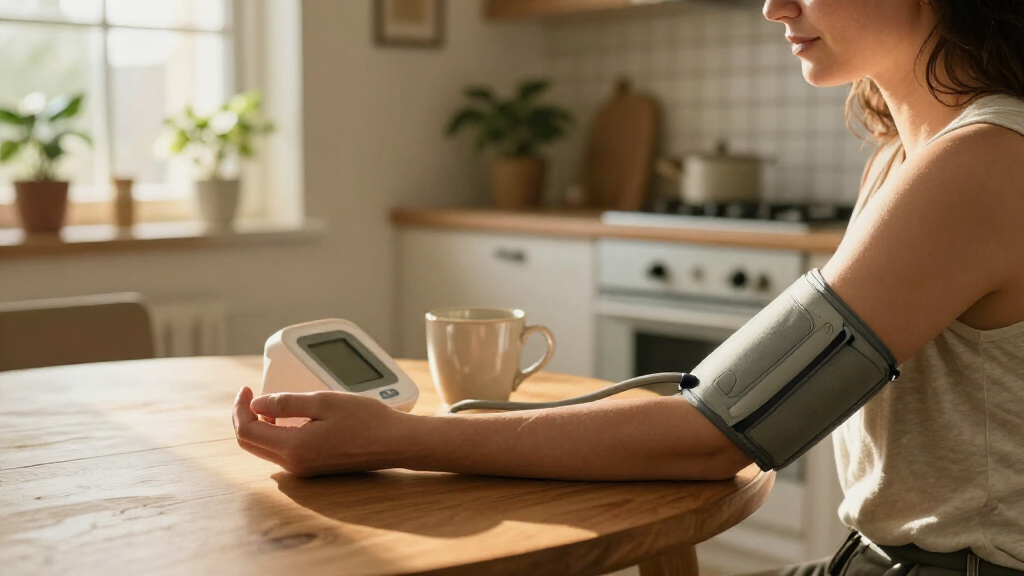
Among these home blood pressure monitors, I’d put the OMRON Bronze Upper Arm Blood Pressure Monitor first for shoppers who want a straightforward upper-arm option, while the OMRON Platinum stands out for AFib detection and the iHealth Track for a wide-range cuff and app-connected tracking. The main tradeoffs are simplicity versus connected features, standard versus adjustable cuff fit, and upper-arm convenience versus the portability of a wrist monitor. A monitor is only useful when its cuff fits properly and you can follow the measurement instructions consistently. I compare all 15 picks by their practical differences, so read on for the full breakdown and a guide to choosing one that suits your needs.
Key Takeaways
- Upper-arm monitors lead this lineup for everyday home use: the Bronze is the straightforward lead pick, while the OMRON Evolv trades a separate display for a more compact wireless design.
- Special features separate premium picks from basic ones: the OMRON Platinum adds AFib detection, while the OMRON Iron and Silver offer alternatives within the same brand family without that named feature.
- Cuff fit is a major point of difference: the Sinocare and iHealth Track call out adjustable or wide-range cuffs, which may suit some users better than models with less prominent fit details.
- Smart tracking is not the only route to usable records: connected options such as the Evolv and iHealth Track suit app-oriented routines, while a simpler monitor may be easier for people who prefer readings on the device itself.
- The Oklar rechargeable wrist monitor fills a distinct portability niche: it is easier to carry than the upper-arm models, but wrist measurement depends on careful positioning and is not the default fit for every buyer.
| OMRON Bronze Upper Arm Blood Pressure Monitor |  | Best for App-Based Tracking | Measurement type: Upper arm | Cuff fit: 9–17 in arm circumference | On-device memory: Up to 14 readings | VIEW LATEST PRICE | See Our Full Breakdown |
| Sinocare Upper Arm Blood Pressure Monitor with Adjustable Cuff |  | Best for Simple Two-Person Use | Measurement type: Upper arm | Cuff fit: 8.6–16.5 in | Display: 3.6-inch screen | VIEW LATEST PRICE | See Our Full Breakdown |
| OMRON Evolv Wireless Upper Arm Blood Pressure Monitor |  | Best Compact Monitor | Measurement type: Wireless upper-arm monitor | Cuff fit: 9–17 in arms | Design: Compact one-piece monitor with attached ComFit cuff | VIEW LATEST PRICE | See Our Full Breakdown |
| A&D Medical UA-767F Blood Pressure Monitor for Home Use |  | Best for Larger Households | Measurement type: Automatic upper-arm blood pressure | Operation: One-button | Users: Up to 4 | VIEW LATEST PRICE | See Our Full Breakdown |
| OMRON Platinum Upper Arm Blood Pressure Monitor with AFib Detection |  | Best for AFib Screening | Measurement location: Upper arm | AFib screening: Automatic with each measurement | Users: 2 | VIEW LATEST PRICE | See Our Full Breakdown |
| OMRON Iron Upper Arm Blood Pressure Monitor |  | Best for Simple, Cuff-Based Checks | Brand: OMRON | Monitor type: Upper arm blood pressure monitor | Cuff fit: Arms 9–17 inches | VIEW LATEST PRICE | See Our Full Breakdown |
| Alcedo Upper Arm Blood Pressure Monitor for Home Use |  | Best for Two-Person Households | Type: Upper arm blood pressure monitor | Display: LCD | Voice broadcast: Adjustable volume | VIEW LATEST PRICE | See Our Full Breakdown |
| Greater Goods Automatic Upper Arm Blood Pressure Monitor |  | Best for Flexible Power and Travel | Type: Automatic upper arm blood pressure monitor | Included cuff: Upper arm cuff | Power accessories: Wall adapter and four AAA batteries | VIEW LATEST PRICE | See Our Full Breakdown |
| OMRON Silver Upper Arm Blood Pressure Monitor |  | Best for App-Based Tracking | Measurement type: Upper arm blood pressure | Reading storage: Up to 30 readings on device; unlimited in OMRON Connect app | Connectivity: Bluetooth | VIEW LATEST PRICE | See Our Full Breakdown |
| Invaxe Automatic Upper Arm Blood Pressure Monitor with Large Backlit Display |  | Best for Large, Easy-to-Read Display | Users: 2 | Storage: 199 readings per user | Display: 4.5-inch backlit LCD | VIEW LATEST PRICE | See Our Full Breakdown |
| Oklar Upper Arm Blood Pressure Monitor |  | Best for Shared Household Tracking | Measurement type: Upper arm blood pressure | Operation: One-button | Display: Backlit LED | VIEW LATEST PRICE | See Our Full Breakdown |
| Upper Arm Blood Pressure Monitor with Adjustable Cuff |  | Best for Date-and-Time Logging | Measurement location: Upper arm | Cuff size: 22–40 cm (8.7–15.7 in) | Memory: 120 readings per user for 2 users | VIEW LATEST PRICE | See Our Full Breakdown |
| AILE Automatic Upper Arm Blood Pressure Monitor |  | Best for a Wider Cuff Range | Measurement type: Automatic upper arm | Displayed results: Systolic pressure, diastolic pressure, and pulse | Cuff size: 8.7–16.5 in (22–42 cm) | VIEW LATEST PRICE | See Our Full Breakdown |
| iHealth Track Smart Upper Arm Blood Pressure Monitor with Wide-Range Cuff |  | Best for App-Based Tracking | Display: Large, multi-color backlit display | Controls: Two-button operation | On-device storage: Up to 99 readings | VIEW LATEST PRICE | See Our Full Breakdown |
| Oklar Rechargeable Wrist Blood Pressure Monitor |  | Best Compact Rechargeable Pick | Measurement location: Wrist | Measurement time: About 35 seconds | Memory: Up to 240 readings for two users | VIEW LATEST PRICE | See Our Full Breakdown |
| home blood pressure monitor | Cuff fit | Power | Display |
|---|---|---|---|
| OMRON Bronze Upper Arm Blood P | 9–17 in arm circumference | Four AA batteries included | — |
| Sinocare Upper Arm Blood Press | 8.6–16.5 in | — | 3.6-inch screen |
| OMRON Evolv Wireless Upper Arm | 9–17 in arms | Four AAA batteries included | — |
| A&D Medical UA-767F Blood Pres | — | — | Large digital LCD |
| OMRON Platinum Upper Arm Blood | 9–17 in arms | Four AA batteries included | — |
| OMRON Iron Upper Arm Blood Pre | Arms 9–17 inches | — | — |
| Alcedo Upper Arm Blood Pressur | Arms 8.7–16.5 inches in circumference | — | LCD |
| Greater Goods Automatic Upper | — | — | — |
| OMRON Silver Upper Arm Blood P | Arms 9–17 inches | — | — |
| Invaxe Automatic Upper Arm Blo | Arm circumferences of 9–17 inches | Four AAA batteries or USB cable; AC adapter not included | 4.5-inch backlit LCD |
| Oklar Upper Arm Blood Pressure | — | 3 AA batteries or Type-C cable | Backlit LED |
| Upper Arm Blood Pressure Monit | — | USB-C cable or 3 AA batteries | Large LCD |
| AILE Automatic Upper Arm Blood | — | 4 AAA batteries or external power | — |
| iHealth Track Smart Upper Arm | 8.7–16.5 in (22–42 cm) arm circumference | 4 AAA batteries included | Large, multi-color backlit display |
| Oklar Rechargeable Wrist Blood | — | Built-in rechargeable battery | Large backlit LED |
More Details on Our Top Picks
OMRON Bronze Upper Arm Blood Pressure Monitor
The OMRON Bronze is a good fit for buyers who want connected tracking without a complicated setup. Bluetooth sends readings to the OMRON Connect app, where you can follow trends and share reports with a doctor; on the monitor itself, storage is limited to 14 readings. That makes it less suitable for someone who wants a long local history, especially compared with the OMRON Evolv, which stores up to 100 readings on the device. The Bronze adds an irregular heartbeat detection feature and a hypertension indicator, giving each reading extra context without requiring a separate app feature. Its cuff fits arms from 9–17 inches, and the included case and batteries make it ready to set up. The tradeoff is reliance on four AA batteries and the app for longer-term records.
Pros:- Bluetooth syncing supports trend tracking and sharing reports through OMRON Connect
- Detects irregular heartbeats during measurement
- Hypertension indicator flags elevated readings
- Includes a wide-range D-ring cuff, storage case, and four AA batteries
Cons:- Stores only 14 readings on the device, fewer than the OMRON Evolv
- Requires four AA batteries
Best for: People who use a smartphone to track blood pressure trends and share readings with a clinician
Not ideal for: Buyers who want extensive reading history stored directly on the monitor or whose arm circumference falls outside 9–17 inches
- Measurement type:Upper arm
- Cuff fit:9–17 in arm circumference
- On-device memory:Up to 14 readings
- App storage:Unlimited readings in the OMRON Connect app
- Connectivity:Bluetooth
- Irregular heartbeat detection:Yes
- Hypertension indicator:Yes
- Power:Four AA batteries included
Our verdict“Choose the Bronze if app-based records and extra reading indicators matter more to you than large on-device memory.”
Sinocare Upper Arm Blood Pressure Monitor with Adjustable Cuff
The Sinocare suits households that want straightforward operation and separate records for two people. Its one-button design and 3.6-inch display keep routine measurements simple, while each user gets space for up to 99 readings. That is more on-device history than the OMRON Bronze provides, though the Bronze offers Bluetooth app syncing for sharing reports and tracking trends beyond the monitor. Sinocare instead focuses on at-home convenience: posture detection can alert users to positioning issues, and color-coded indicators make the displayed blood pressure category easier to scan. It also offers irregular heartbeat alerts and can run on four AAA batteries or Type-C power. The Type-C cable is not included, so buyers choosing that power option need to supply one. Its cuff fits 8.6–16.5-inch arms, a different range from the OMRON models here.
Pros:- One-button operation and a 3.6-inch display are easy to use
- Stores up to 99 readings for each of two users
- Posture detection and color-coded indicators add at-a-glance guidance
- Can use four AAA batteries or Type-C power
Cons:- Type-C cable is not included
- No app connectivity is specified for tracking or sharing readings
Best for: Two-person households seeking simple controls, large readings, and separate on-device measurement histories
Not ideal for: People who need Bluetooth-based records or report sharing, or whose arm circumference is outside 8.6–16.5 inches
- Measurement type:Upper arm
- Cuff fit:8.6–16.5 in
- Display:3.6-inch screen
- Operation:One-button
- Users:2
- Memory:Up to 99 readings per user
- Power options:Four AAA batteries or Type-C charging port; cable not included
- Additional features:Posture detection, color-coded blood pressure indicators, and irregular heartbeat alerts
Our verdict“Pick Sinocare for a simple two-user monitor with substantial local storage, not for app-based tracking.”
OMRON Evolv Wireless Upper Arm Blood Pressure Monitor
The OMRON Evolv is the most compelling choice here for buyers who value a compact, one-piece setup. Its cuff is attached to the monitor, so there is less separate equipment to position and put away than with the OMRON Platinum, which includes a conventional D-ring cuff and storage case. Evolv still offers Bluetooth syncing to OMRON Connect, irregular heartbeat detection, and space for up to 100 readings on the device. That local memory makes it more self-sufficient than the OMRON Bronze if you do not want to rely on the app for your recent history. The attached ComFit cuff fits arms measuring 9–17 inches, so it will not work for every user. It also uses four AAA batteries, and its compact design does not provide the Platinum’s automatic AFib screening.
Pros:- Compact one-piece design keeps the cuff attached to the monitor
- Stores up to 100 readings on the device
- Bluetooth app supports trend tracking and sharing reports
- Detects irregular heartbeats during measurements
Cons:- Cuff fits only arms measuring 9–17 inches
- Does not offer the OMRON Platinum’s automatic AFib screening
- Requires four AAA batteries
Best for: People who want an easy-to-store upper-arm monitor with an attached cuff, app syncing, and useful on-device memory
Not ideal for: Users who need automatic AFib screening, a cuff outside the 9–17-inch range, or a multi-user memory system
- Measurement type:Wireless upper-arm monitor
- Cuff fit:9–17 in arms
- Design:Compact one-piece monitor with attached ComFit cuff
- On-device memory:Up to 100 readings
- App storage:Unlimited readings in the OMRON Connect app
- Connectivity:Bluetooth
- Irregular heartbeat detection:Yes
- Power:Four AAA batteries included
Our verdict“Choose the Evolv if compact storage and a cuff that stays attached matter more than AFib screening or multi-user records.”
A&D Medical UA-767F Blood Pressure Monitor for Home Use
The A&D Medical UA-767F stands apart for supporting up to four users, making it a better household fit than the two-user Sinocare or OMRON Platinum. Each person gets a separate history of up to 60 readings, and snapshot averaging can help users review a set of measurements rather than focusing on a single result. A large LCD and one-button operation keep the routine accessible, while the cuff-fit alert provides a prompt if the cuff is not positioned correctly. Its included cuff fits 8.6–16.5-inch arms. The main compromise is its companion app: readings must be entered manually, unlike the Bluetooth-connected OMRON Bronze and Evolv. An AC adapter is sold separately, and the supplied cuff may not suit everyone; other compatible cuff sizes are also sold separately.
Pros:- Supports up to four users with separate memory
- Stores up to 60 readings per user
- Large LCD and one-button operation simplify routine use
- Snapshot averaging and a cuff-fit alert add useful measurement guidance
Cons:- Readings must be entered manually in the companion app
- AC power adapter is sold separately
- Other compatible cuff sizes are sold separately
Best for: Families or shared households with up to four people who want individual reading histories on one monitor
Not ideal for: Buyers who want automatic Bluetooth syncing, need an AC adapter included, or require a cuff size other than the included 8.6–16.5-inch range
- Measurement type:Automatic upper-arm blood pressure
- Operation:One-button
- Users:Up to 4
- Memory:Up to 60 readings per user
- Included cuff fit:8.6–16.5 in (22–42 cm)
- Display:Large digital LCD
- Additional features:Snapshot averaging and cuff-fit alert
- App and power:A&D Heart Track app with manual logging; AC adapter sold separately
Our verdict“Choose the UA-767F for a shared home with more than two users, provided manual app logging is acceptable.”
OMRON Platinum Upper Arm Blood Pressure Monitor with AFib Detection
The OMRON Platinum is the feature-led pick for buyers who want automatic AFib screening with every measurement. That sets it apart from the OMRON Evolv, which detects irregular heartbeats but does not list automatic AFib screening. The Platinum also supports two users, stores up to 100 readings per person, and connects by Bluetooth to OMRON Connect for tracking and sharing results. This makes it a stronger fit for a couple than the single-device history offered by the Evolv, while the four-user A&D Medical UA-767F better serves larger households. Its D-ring cuff fits 9–17-inch arms, and the package includes an AC adapter, case, and batteries. The tradeoffs are its limited user count and the need for a compatible smartphone to use app features; its cuff range also excludes some users.
Pros:- Automatically screens for atrial fibrillation with each measurement
- Stores up to 100 readings for each of two users
- Bluetooth app supports tracking and sharing results
- Includes a D-ring cuff, AC adapter, storage case, and four AA batteries
Cons:- Cuff fits only arms measuring 9–17 inches
- Supports two users, fewer than the four-user A&D Medical UA-767F
- App features require a compatible smartphone
Best for: People seeking automatic AFib screening at each measurement, especially couples who want separate records and app-based tracking
Not ideal for: Households with more than two users, people with arms outside the 9–17-inch cuff range, or buyers who do not use a compatible smartphone for app features
- Measurement location:Upper arm
- AFib screening:Automatic with each measurement
- Users:2
- Memory:Up to 100 readings per user
- Connectivity:Bluetooth; OMRON Connect app
- Cuff fit:9–17 in arms
- Included accessories:D-ring cuff, AC adapter, storage case, instruction manual, and quick start guide
- Power:Four AA batteries included
Our verdict“Choose the Platinum if automatic AFib screening and two-person app tracking are higher priorities than four-user capacity.”
OMRON Iron Upper Arm Blood Pressure Monitor
The OMRON Iron is a straightforward choice for buyers who want an upper-arm monitor without app setup or a crowded feature set. Its one-touch operation keeps routine checks simple, while body-movement alerts can flag a measurement that may be affected by shifting during use. It also detects irregular heartbeats, adding a useful signal to the reading without asking you to manage stored data or a phone connection. Compared with the OMRON Silver, Iron gives up Bluetooth tracking and its elevated-reading indicator in favor of a simpler routine. The tradeoff is that the product information does not specify on-device memory or app support, so it is less suited to people who want to review trends over time. Its cuff fits arms from 9 to 17 inches, but the upper-arm setup may feel less convenient than a wrist monitor.
Pros:- One-touch operation simplifies routine measurements
- Detects irregular heartbeats during readings
- Body-movement alerts can flag readings affected by movement
- Wide-range cuff fits arm circumferences from 9 to 17 inches
Cons:- No app connectivity or reading-storage details are provided
- Upper-arm cuff setup may be less convenient than a wrist monitor
Best for: Buyers who want one-button upper-arm readings, movement alerts, and irregular-heartbeat detection without app-based tracking
Not ideal for: People who want Bluetooth reports, detailed reading history, or the convenience of a wrist monitor
- Brand:OMRON
- Monitor type:Upper arm blood pressure monitor
- Cuff fit:Arms 9–17 inches
- Measurement technology:Advanced Accuracy Technology
- Irregular heartbeat detection:Yes
- Body movement alerts:Yes
- Operation:One-touch button
- Included:Monitor, wide-range D-ring cuff, instruction manual, quick start guide
Our verdict“Choose the OMRON Iron for uncomplicated upper-arm checks with movement and irregular-heartbeat alerts, but pick the OMRON Silver if you want app-based tracking.”
Alcedo Upper Arm Blood Pressure Monitor for Home Use
The Alcedo is the strongest fit here for households that want separate histories for two users. Each profile can store 120 readings, and its automatic three-reading average offers a steadier reference than relying on a single check. A voice broadcast with adjustable volume can make the result easier to follow for people who have trouble reading a display, while cuff-position and movement checks give practical feedback during setup. Compared with the Invaxe, Alcedo has less listed storage per user, but its voice feature and cuff-position check make the measurement process more guided. The stated cuff range is 8.7–16.5 inches, a little different from Invaxe’s 9–17-inch range, so fit should be checked against the user’s arm. The product details do not specify a carrying case or power options.
Pros:- Two user modes keep household readings separate
- Stores up to 120 readings per user
- Automatically averages three readings
- Voice broadcast, cuff-position check, and movement detection support easier use
Cons:- Cuff fit is limited to arm circumferences of 8.7–16.5 inches
- Product details do not specify a travel case or power accessories
Best for: Couples or family members who need separate measurement histories, spoken results, and a guided cuff setup
Not ideal for: Users whose arms fall outside the 8.7–16.5-inch cuff range or who need clearly specified travel and power accessories
- Type:Upper arm blood pressure monitor
- Display:LCD
- Voice broadcast:Adjustable volume
- Measurement averaging:Automatically averages 3 readings
- User modes:2
- Memory:120 readings per user
- Cuff fit:Arms 8.7–16.5 inches in circumference
- Measurement checks:Cuff-position self-check and movement detection
- FSA/HSA eligible:Yes
Our verdict“Choose Alcedo for a two-person home that values spoken results and separate histories, while the Invaxe is the better fit for users prioritizing more stored readings per profile.”
Greater Goods Automatic Upper Arm Blood Pressure Monitor
Greater Goods stands out for its ready-to-go accessory bundle: it includes an upper-arm cuff, wall adapter, four AAA batteries, and a travel case. Having both plug-in and battery power gives buyers more flexibility than the OMRON Silver, which includes batteries and a storage case but does not list a wall adapter. That can be useful for keeping the monitor in one place while still having a case for transport. Its main limitation is that the supplied description does not give details about memory, app connectivity, display, or measurement alerts, so I would not choose it for trend tracking or guided readings based on the available information. Another fit-related caveat is that smaller and larger cuffs are available only by contacting customer support. Buyers who need a specific cuff size should check availability before choosing it.
Pros:- Includes both a wall adapter and four AAA batteries
- Travel case is included
- Smaller and larger cuff sizes are available through manufacturer support
Cons:- Additional cuff sizes require contacting customer support
- Product details do not specify memory, app connectivity, or measurement alerts
Best for: People who want both battery and wall-powered operation plus a case for carrying the monitor
Not ideal for: Buyers who need clearly documented memory or app features, or who require a nonstandard cuff size without contacting support
- Type:Automatic upper arm blood pressure monitor
- Included cuff:Upper arm cuff
- Power accessories:Wall adapter and four AAA batteries
- Carrying accessory:Travel case
- Additional cuff sizes:Smaller and larger sizes available through customer support
- Reading storage:Not specified in supplied product data
Our verdict“Pick Greater Goods if flexible power and a travel case matter more than documented tracking features, and verify cuff availability if the included size may not fit.”
OMRON Silver Upper Arm Blood Pressure Monitor
The OMRON Silver is the clearest choice in this group for people who want to move readings from the monitor into a longer-term record. Bluetooth syncs with the OMRON Connect app, which supports tracking and sharing reports; Apple Health and Google Fit compatibility can help keep that information alongside other health data. It also flags elevated readings and irregular heartbeats, giving it more feedback features than the simpler OMRON Iron. The compromise is that on-device memory holds only 30 readings, so users who do not regularly sync may have a short local history. Its cuff fits arms from 9 to 17 inches, which may rule it out for some users. The included ComFit cuff, storage case, and batteries make setup more complete, but the app connection is the main reason to choose this model.
Pros:- Bluetooth connects readings to the OMRON Connect app
- App supports tracking and sharing reports, with Apple Health and Google Fit compatibility
- Alerts for elevated readings and irregular heartbeats
- Includes a ComFit cuff, storage case, and four AA batteries
Cons:- On-device memory is limited to 30 readings
- Cuff fits only arm circumferences from 9 to 17 inches
Best for: People who routinely log readings, want to share reports, and already use Apple Health, Google Fit, or OMRON Connect
Not ideal for: Users who prefer not to use a smartphone or whose arm circumference falls outside the 9–17-inch cuff range
- Measurement type:Upper arm blood pressure
- Reading storage:Up to 30 readings on device; unlimited in OMRON Connect app
- Connectivity:Bluetooth
- Cuff fit:Arms 9–17 inches
- Irregular heartbeat detection:Yes
- Hypertension indicator:Yes
- App compatibility:Apple Health and Google Fit
- Included items:Monitor, ComFit cuff, storage case, instruction manual, quick start guide, four AA batteries
Our verdict“Choose the OMRON Silver if app-based history and report sharing are priorities; the OMRON Iron is simpler for buyers who do not need connected tracking.”
Invaxe Automatic Upper Arm Blood Pressure Monitor with Large Backlit Display
The Invaxe makes its case with a 4.5-inch backlit display and generous memory: it stores up to 199 readings for each of two users. That combination suits a household that wants to read results easily and keep separate histories without depending on an app. It also averages the last three measurements and detects irregular heartbeats. Compared with the Alcedo, Invaxe offers more storage per user and a larger specified display, while Alcedo adds an adjustable-volume voice broadcast and a cuff-position self-check. Invaxe’s cuff fits arms from 9 to 17 inches, so it is not the broader fit option of the Alcedo. Power flexibility is another plus: it runs on AAA batteries or USB, though an AC adapter is not included. A carrying bag is supplied for storage or transport.
Pros:- Stores up to 199 readings for each of two users
- 4.5-inch backlit LCD supports easier reading
- Averages the last three measurements and detects irregular heartbeats
- Includes four AAA batteries, USB cable, and carrying bag
Cons:- AC adapter is not included
- Cuff fits only arm circumferences of 9–17 inches
Best for: Two-person households that want a large illuminated display and substantial separate reading histories without app tracking
Not ideal for: Users who need voice readouts, a cuff outside the 9–17-inch range, or a complete wall-power setup with an included AC adapter
- Users:2
- Storage:199 readings per user
- Display:4.5-inch backlit LCD
- Cuff fit:Arm circumferences of 9–17 inches
- Power:Four AAA batteries or USB cable; AC adapter not included
- Measurement features:Averages last 3 readings; irregular heartbeat detection
- Included accessories:Cuff, four AAA batteries, USB cable, carrying bag, user manual
- Warranty:Lifetime warranty
Our verdict“Choose Invaxe for a large display and substantial two-user memory, while Alcedo is a better match if spoken results and cuff-position guidance matter more.”
Oklar Upper Arm Blood Pressure Monitor
The Oklar stands out for households that want separate reading histories without a complicated setup. Its one-button operation and backlit LED make routine checks straightforward, while 240 stored readings total gives each of two users room for up to 120 measurements. That is more combined on-device history than the AILE Automatic Upper Arm Blood Pressure Monitor, which stores 99 readings per user, though the AILE has a slightly wider cuff range. Power flexibility is another practical plus: use three AA batteries or the included Type-C cable. The tradeoff is that the monitor is not rechargeable, and its 8.7–15.7-inch cuff may not fit some larger arms. I’d choose it for simple shared tracking, not for maximum cuff flexibility.
Pros:- One-button operation keeps routine measurements simple
- Backlit LED display is easier to read in dim rooms
- Stores up to 120 readings for each of two users
- Can run on AA batteries or the included Type-C cable
Cons:- Built-in battery is not rechargeable
- Cuff range may exclude some adult arm sizes
Best for: Two-person households that want simple controls and separate stored histories for routine blood pressure checks.
Not ideal for: People with arm circumferences outside 8.7–15.7 inches or buyers who specifically want a rechargeable monitor.
- Measurement type:Upper arm blood pressure
- Operation:One-button
- Display:Backlit LED
- Reading storage:Up to 240 readings total
- Users:2 users, up to 120 readings per user
- Power:3 AA batteries or Type-C cable
- Rechargeable:No
- Cuff range:8.7–15.7 in (22–40 cm)
Our verdict“Choose the Oklar for straightforward two-user tracking and flexible power, provided its cuff fits your arm.”
Upper Arm Blood Pressure Monitor with Adjustable Cuff
This monitor’s strongest distinction is not a larger memory bank, but dated, timed readings for two users. That context can make a home log easier to review alongside a care plan than a list of numbers without timestamps. It stores 120 readings per user, matching the Oklar Upper Arm Blood Pressure Monitor’s per-person capacity, and adds a large LCD, one-touch operation, and a reading time under a minute. The included storage bag and USB-C cable make it a tidy choice for keeping the kit together. Its 22–40 cm cuff has the same stated range as the Oklar, so it does not solve fit issues for larger arms. Also, AA batteries are not included; the Oklar’s listed battery setup does not carry that same stated omission.
Pros:- Stores up to 120 readings for each of two users
- Records the date and time with readings
- Large LCD and one-touch operation support simple home checks
- Includes a storage bag, cuff, and USB-C cable
Cons:- AA batteries are not included
- Cuff range is limited to 22–40 cm
Best for: Couples or caregivers who want a dated, timed record for each user and a monitor kit that stores neatly between checks.
Not ideal for: Buyers who need a cuff wider than 22–40 cm or want to use AA power without purchasing batteries separately.
- Measurement location:Upper arm
- Cuff size:22–40 cm (8.7–15.7 in)
- Memory:120 readings per user for 2 users
- Reading time:Under 1 minute
- Reading record:Date and time
- Power:USB-C cable or 3 AA batteries
- Display:Large LCD
- Included items:Cuff, storage bag, power cable, quick guide, and manual
Our verdict“Pick this model when timestamped two-user records matter more than included batteries or a wider cuff range.”
AILE Automatic Upper Arm Blood Pressure Monitor
The AILE is a sensible choice when cuff fit is the deciding factor: its 8.7–16.5-inch range extends an inch beyond the Oklar Upper Arm Blood Pressure Monitor and the Adjustable Cuff model in this group. It automatically displays systolic pressure, diastolic pressure, and pulse, while the large screen keeps the core results visible. Two users can each save 99 dated readings, enough for a useful on-device log but less than the 120-per-user capacity of those Oklar options. Battery or external power adds flexibility for home use and travel, although battery operation calls for four AAA cells. The AILE makes the most sense for users whose arms need its added range; those who prioritize longer memory or simpler power needs may prefer another pick.
Pros:- Cuff fits arm circumferences up to 16.5 inches
- Automatically displays systolic, diastolic, and pulse readings
- Stores 99 dated readings for each of two users
- Supports battery or external power
Cons:- Battery operation requires four AAA batteries
- Memory per user is lower than the Oklar upper-arm options
Best for: People who need a cuff range up to 16.5 inches and want automatic readings with separate dated histories for two users.
Not ideal for: Users who want more than 99 saved readings per person or prefer a monitor that uses fewer batteries.
- Measurement type:Automatic upper arm
- Displayed results:Systolic pressure, diastolic pressure, and pulse
- Cuff size:8.7–16.5 in (22–42 cm)
- Memory:99 dated readings per user; 2 users
- Power:4 AAA batteries or external power
- Weight:13.4 oz
- Dimensions:5.5 × 3.8 × 2.7 in
Our verdict“Choose the AILE if its wider cuff range is a better fit than the longer memory offered by the Oklar models.”
iHealth Track Smart Upper Arm Blood Pressure Monitor with Wide-Range Cuff
The iHealth Track is the clear pick for buyers who want readings to move beyond the monitor: Bluetooth syncing sends results to compatible iOS and Android apps, while on-device storage holds up to 99 readings. Its color-coded backlit display gives a quick visual cue at the monitor itself, and it can alert users to possible heart rhythm disturbances. That connected approach differs from the Oklar Upper Arm Blood Pressure Monitor, which stores more readings for two users but has no app syncing listed. The iHealth cuff also spans 8.7–16.5 inches, wider than the Oklar’s stated range. The tradeoff is reliance on a compatible phone and Bluetooth, plus setup instructions that warrant careful reading. Its two-button design is less minimal than a one-button model.
Pros:- Syncs readings with compatible iOS and Android apps over Bluetooth
- Large color-coded backlit display
- Alerts users to possible heart rhythm disturbances
- Cuff fits upper arms measuring 8.7–16.5 inches
Cons:- App syncing requires a compatible phone and Bluetooth 4.0 or later
- Stores up to 99 readings on the device, fewer than the Oklar upper-arm model
- Instructions call for careful reading before first use
Best for: Phone users who want app-based records, a color-coded display, and possible heart rhythm disturbance alerts during home checks.
Not ideal for: People who want a phone-free setup, have an incompatible device, or prefer the simplest possible one-button controls.
- Display:Large, multi-color backlit display
- Controls:Two-button operation
- On-device storage:Up to 99 readings
- App compatibility:iOS 12.0 or later; Android 9.0 or later
- Connectivity:Bluetooth 4.0 or later
- Cuff fit:8.7–16.5 in (22–42 cm) arm circumference
- Power:4 AAA batteries included
- Standards and warranty:Meets ESH 2010 performance standards; 12-month warranty
Our verdict“Choose the iHealth Track for connected recordkeeping and visual cues, not for maximum on-device memory or phone-free use.”
Oklar Rechargeable Wrist Blood Pressure Monitor
This Oklar takes a different route from the upper-arm monitors in this roundup: it measures at the wrist, making the unit compact and rechargeable for travel or households that want to avoid routine battery swaps. It stores up to 240 readings for two users, matching the total memory of the Oklar Upper Arm Blood Pressure Monitor, and adds adjustable voice announcements to its large backlit display. A reading takes about 35 seconds. The tradeoff is the wrist measurement location: it is not a direct substitute for an upper-arm cuff, so buyers should follow the device’s positioning guidance and their clinician’s advice. The 4.92–8.46-inch cuff range also limits fit. Unlike the iHealth Track, it has no app connectivity listed; its appeal is portability and built-in charging, not phone-based records.
Pros:- Built-in rechargeable battery charges via USB-C
- Stores up to 240 readings for two users
- Large backlit LED display with adjustable voice announcements
- Measures in about 35 seconds
Cons:- Measures at the wrist rather than the upper arm
- Charging adapter is not included
- Wrist cuff fit is limited to 4.92–8.46 inches
Best for: Travelers or users who specifically want a compact wrist monitor with rechargeable power, voice announcements, and two-user memory.
Not ideal for: Buyers seeking an upper-arm monitor, users whose wrists fall outside 4.92–8.46 inches, or people who want app syncing.
- Measurement location:Wrist
- Measurement time:About 35 seconds
- Memory:Up to 240 readings for two users
- Cuff fit range:4.92–8.46 in
- Display:Large backlit LED
- Power:Built-in rechargeable battery
- Charging connector:USB-C
- Charging adapter:Not included
- Auto shutoff:After 60 seconds of inactivity
Our verdict“Choose this Oklar for portable wrist-based checks and rechargeable convenience, but select an upper-arm model if that measurement location is required.”
How We Picked
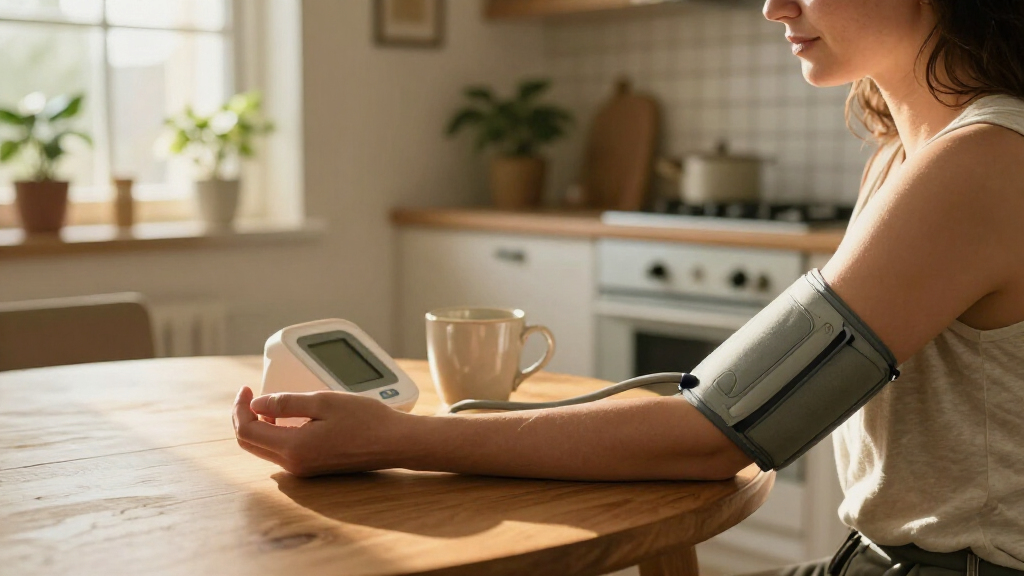
I ranked these home blood pressure monitors around the decisions that shape everyday use: monitor type, cuff-fit information, display and controls, data storage or app connectivity, and named functions such as AFib detection. I gave more weight to a clear, practical role than to a long feature list; a feature only helps when it supports a buyer’s routine and can be used correctly. I also treated upper-arm designs as the more broadly suitable starting point, while keeping the wrist model in the lineup for buyers who value portability or need to explore alternatives.
The order reflects the balance of usability and distinctive benefits, not a claim that one device will suit every person or produce better readings for everyone. The OMRON Bronze leads as a direct, uncomplicated choice; Platinum ranks higher for shoppers who specifically want its AFib feature, and Evolv offers a different compact, wireless approach. Models with adjustable or wide-range cuffs earn attention for fit, while simpler or less differentiated options rank below picks with a clearer use case. Buyers should check cuff sizing and follow the instructions for their chosen device, and discuss monitor selection with a health professional when they have particular medical needs.
Factors to Consider When Choosing Home Blood Pressure Monitors
Before choosing among these home blood pressure monitors, match the device to the way you will measure, record, and share readings. A large feature set cannot compensate for a poor cuff fit or inconsistent technique. These broader checks can help you avoid buying a monitor that looks convenient but is awkward to use day after day.
Start With Cuff Fit, Not the Feature List
Measure the upper arm where the cuff instructions specify, then compare that measurement with the manufacturer’s stated cuff range. A cuff that is too tight or too loose can make readings less dependable, so do not assume “adjustable” means it fits every arm. Wide-range and adjustable-cuff models may simplify shopping, but the actual range still matters. If the cuff is near the edge of its stated range, ask a clinician or pharmacist to help check the fit. Avoid choosing a model by brand name alone when the cuff size is the deciding factor.
Choose a Measurement Style You Can Repeat
Upper-arm monitors are the usual starting point for home tracking, while a wrist model can be useful when portability or upper-arm cuff fit creates a problem. Wrist readings require the device to be held at heart level, a position that can be harder to reproduce consistently. A compact monitor is not automatically easier if its measurement posture takes extra attention. Think about where you will take readings and whether you can sit still with your arm supported. If you are unsure whether a wrist monitor is suitable for you, ask a health professional before relying on it.
Decide How You Want to Keep Readings
Some buyers prefer to view readings on the monitor and keep a written log; others want app-based records they can review or share. Connectivity can reduce manual entry, but it adds setup steps and may depend on a compatible phone and an app you are willing to use. Before paying for smart features, decide whether you need trend views, stored readings, or a simple number at the time of measurement. Check what the device records and how that information can be accessed. A paper log remains a practical backup if the app is inconvenient or unavailable.
Pay for Special Detection Only When It Fits Your Needs
Features such as AFib detection may be a reason to compare a specific model, but they do not replace a medical assessment or confirm a diagnosis on their own. Ask your clinician whether a feature is relevant to your care before treating it as a deciding factor. A basic monitor may be the better purchase if you mainly need routine readings to share at appointments. Extra functions can also add interface complexity, so consider who will operate the device. Choose features for a clear use, rather than assuming more functions mean a better match.
Check the Daily Routine and Power Setup
Consider who will use the monitor, how often readings are taken, and whether the display is easy for that person to read. Backlighting or larger controls can matter more than app features for someone measuring in a dim room or with limited dexterity. Battery-powered, rechargeable, and wireless designs each bring different habits: charging can be easy to forget, while replaceable batteries need to be on hand. Look at what is included and what upkeep the instructions call for. A monitor that fits the household routine is more likely to be used consistently.
Treat Technique and Clinical Review as Part of the Purchase
Even a suitable monitor can give misleading results if readings are taken under inconsistent conditions. Follow the device instructions, rest quietly before measuring, keep the arm supported, and take readings at the schedule advised by your clinician. Do not change medication based on a single home reading or a device alert. Bring the monitor or its stored records to an appointment so a health professional can discuss how the results compare with clinic measurements. This check can also help identify technique or cuff-fit problems early.
Frequently Asked Questions
Should I choose an upper-arm monitor or the Oklar wrist monitor?
I would start by checking whether an upper-arm cuff fits and is comfortable to use, since that is the format used by most options in this roundup. The Oklar wrist monitor is a portability-focused alternative, but wrist position can affect readings and takes care to keep at heart level. If upper-arm fit or mobility makes that format difficult, ask a clinician whether a wrist device is suitable for your situation. Follow the model’s positioning instructions each time rather than switching between measurement styles casually. If you use a wrist monitor, bring it to an appointment to review your technique and results.
Is an AFib-detection feature worth choosing over a simpler monitor?
The OMRON Platinum is the lineup’s clear choice if you specifically want a monitor with a named AFib-detection feature. That feature may be useful to discuss with a clinician, but a home monitor alert is not a diagnosis and should not replace medical evaluation. If your main need is routine blood pressure tracking, a simpler model such as the OMRON Bronze may be a more direct fit. Ask your health professional whether this function relates to your care before making it the reason to choose one device. The right pick depends on whether you will use the feature appropriately, not on how many functions the monitor lists.
How do I know whether an adjustable or wide-range cuff will fit me?
Measure your arm according to the monitor’s instructions and compare the result with the stated cuff range for that exact model. An adjustable or wide-range label signals flexibility, but it does not confirm that every arm size is covered. The Sinocare and iHealth Track specifically emphasize cuff flexibility, so they are natural models to examine when fit is a concern. If your measurement falls near a range limit, get help checking the cuff placement and fit before relying on readings. A health professional or pharmacist may be able to help you assess the fit.
Do I need a connected monitor, or is a basic model enough?
A connected monitor makes sense if you want app-based records and will use the phone setup regularly. The OMRON Evolv and iHealth Track offer a more connected approach, while a straightforward monitor may be simpler when you only need readings to record or discuss at appointments. Before choosing smart features, check phone compatibility, how readings are stored, and whether you are comfortable using the app. If app setup would become a barrier, a screen-based routine and a written log may be easier to maintain. The best record system is the one you can use consistently and share when needed.
What should I do if my home readings do not match the clinic’s?
Do not change medication or dismiss either set of readings based on one comparison. Bring your monitor and a record of recent measurements to your next appointment so a health professional can check the device, cuff fit, and your technique. Readings can differ when timing, posture, rest, or measurement conditions differ. Follow the schedule and instructions you were given, and ask how to handle readings that fall outside your care plan. If a reading is concerning or you have symptoms, follow your clinician’s advice for seeking timely help.
Conclusion
For most shoppers seeking a practical starting point, I’d choose the OMRON Bronze as best overall because its role is straightforward rather than tied to a specialized feature. The Sinocare adjustable-cuff monitor is my value-oriented pick for buyers who want cuff flexibility, while the OMRON Platinum is the premium choice for someone specifically interested in its AFib-detection function. Beginners who want a simpler path should start with the Bronze and prioritize a readable display and a cuff that fits, rather than adding app features they may not use. For connected records, compare the OMRON Evolv with the iHealth Track; for a portable wrist format, consider the Oklar only after checking that wrist measurement suits your needs. In every case, match the cuff to your arm and review your device and technique with a health professional.