TL;DR
A Swedish study that followed 2,993 adults aged 60 and older for 16 years found that greater vegetation close to home was associated with a 20% lower risk of developing dementia. The observational finding does not establish that greenery caused the lower risk, and the association was strongest within 100 meters and more pronounced among women.
A 16-year study of 2,993 older adults in Stockholm found that people living with more vegetation close to home had a 20% lower risk of developing dementia over time. The observational study, published in Alzheimer’s & Dementia, found the association was strongest for greenery within 100 meters of a residence; it does not show that nearby vegetation directly prevents dementia.
Researchers from Stockholm University and Karolinska Institute studied participants aged 60 or older in the population-based SNAC-K study. During the 16-year follow-up, 477 participants developed dementia. The researchers mapped vegetation around participants’ homes using satellite imagery and geographic information systems, with measurements for areas within 100, 250 and 500 meters.
The reported link was strongest for vegetation in the closest residential area, within 100 meters, and weaker for greenery farther away. Researchers also reported that the association with lower dementia risk was more pronounced among women. The source material does not provide a separate effect estimate for women or explain how large the difference was.
The researchers accounted for factors including age, education, socioeconomic circumstances, lifestyle, air pollution, traffic noise and proximity to water. Those adjustments help address potential influences on the results, but they cannot rule out all differences between people or neighborhoods. The study measured an association over time, not the effect of assigning people to live in greener areas.
Why Near-Home Greenery Matters
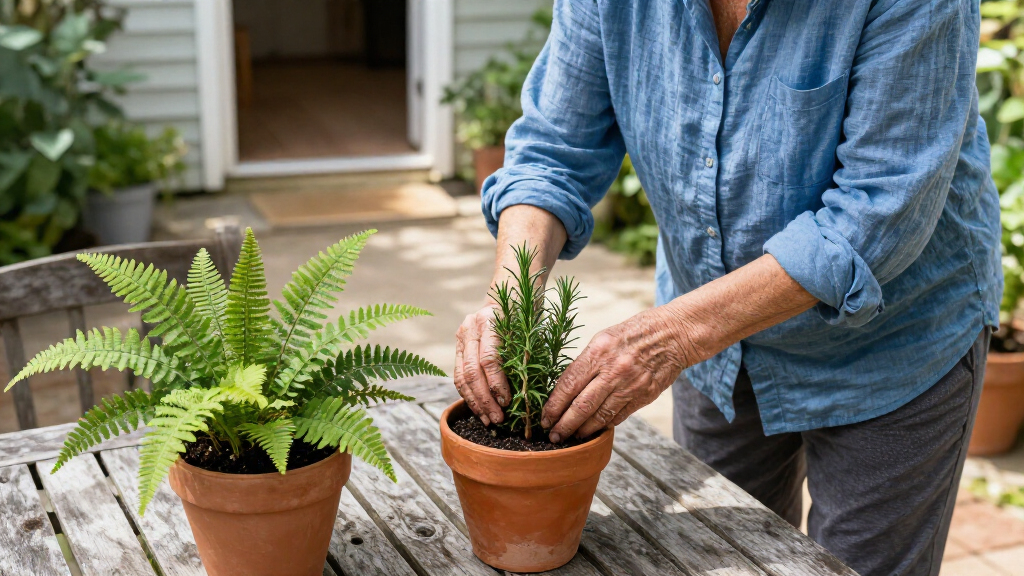
The findings point to the immediate home environment as a possible part of the broader picture of healthy ageing. A nearby green courtyard, street trees, gardens or planted walking routes may be more relevant to everyday exposure than distant parks, particularly for people who spend substantial time at home. The study does not establish which types of greenery matter most or whether residents used the outdoor spaces.
The research may inform discussions about urban design and public health, because it examines vegetation at a scale planners can influence around housing. The study authors argue that greenery can also serve goals beyond brain health, including reducing heat, noise and air pollution and supporting biodiversity. Those broader benefits are not proof that greening projects will reduce dementia rates.
For readers, the result is a population-level finding, not a personal prediction. It does not mean that someone in a less green neighborhood will develop dementia, or that moving near vegetation will lower an individual’s risk by 20%. Dementia has multiple contributing factors, and the study cannot establish cause and effect.
indoor and outdoor garden planters
As an affiliate, we earn on qualifying purchases.
As an affiliate, we earn on qualifying purchases.
How the Stockholm Study Worked
The report describes a cohort study using data from SNAC-K, a population-based study in Stockholm. Researchers repeatedly assessed participants’ cognitive health and tracked dementia diagnoses over time, while estimating the vegetation around their residences. The article was published in 2026 in Alzheimer’s & Dementia under the title “Precision residential greenspace, urban environmental exposures, and incident dementia among older adults in Sweden: A 16-year cohort study.”
Researchers examined residential greenery at several distances and adjusted for a range of personal and environmental factors. That approach allowed them to compare the observed association across different nearby areas, with the strongest reported association at 100 meters. The study is part of research into how everyday surroundings may relate to health; the article also notes prior work by the research group associating nearby greenery with sleep and mental health measures, life satisfaction and antidepressant medication use.
“This is nature that forms part of the everyday home environment. Such environments may be particularly important when we spend more time at home.”
— Cecilia Stenfors, associate professor of psychology at Stockholm University and the study’s research leader and first author
residential street tree planting kits
As an affiliate, we earn on qualifying purchases.
As an affiliate, we earn on qualifying purchases.
What the Association Cannot Show
Because the study was observational, it cannot establish that greenery caused the lower dementia risk. Even with adjustments for several factors, unmeasured differences between residents or neighborhoods may help explain the association. The supplied report does not describe a randomized intervention or demonstrate that increasing vegetation around a home changes dementia outcomes.
The report also does not provide confidence intervals, detailed subgroup figures, or a full account of how dementia cases were identified. It is not clear from the supplied material how the researchers handled participants who moved during follow-up, or whether specific forms of greenery had different associations. The finding among women is described as stronger, but the size and statistical detail of that difference are not given.
The 20% lower risk is a relative association reported by the study, not an individual guarantee or a stated absolute reduction in the chance of dementia. The source material does not give enough information to calculate an absolute risk difference for residents.
As an affiliate, we earn on qualifying purchases.
Questions for Future Research
The published cohort study adds evidence for researchers and urban planners to examine, but the source material does not announce a follow-up trial or policy change. Further work could test whether the association appears in other populations and cities, clarify the difference reported between women and men, and distinguish the effects of different vegetation types and actual access to green space.
Researchers could also examine whether changes in residential greenery over time correspond with changes in dementia outcomes, while accounting for moves and neighborhood conditions. For now, the study’s supported conclusion is narrower: in this Stockholm cohort, more vegetation near home was associated with lower dementia risk, particularly within 100 meters. It does not establish a prevention strategy, and people should not treat greenery as a substitute for professional medical guidance about dementia or brain health.
As an affiliate, we earn on qualifying purchases.
Key Questions
How many people were included in the study?
The study included 2,993 Stockholm residents aged 60 or older in the SNAC-K population-based study. During 16 years of follow-up, 477 participants developed dementia.
How close to home was the greenery measured?
Researchers estimated vegetation within 100, 250 and 500 meters of participants’ homes. The reported association was strongest within 100 meters and weaker at greater distances.
Does the study prove that greenery prevents dementia?
No. It was an observational cohort study, so it found an association but cannot show that nearby vegetation caused the lower risk. Other measured or unmeasured differences may have contributed.
Was the association the same for women and men?
The researchers reported that the association was more pronounced among women. The supplied report does not provide the subgroup estimates or explain the size of the difference.
What kinds of greenery were counted?
The report describes vegetation measured around homes using satellite imagery and geographic information systems. It does not give a detailed breakdown of effects by greenery type, such as trees, gardens or parks.
Source: rss