TL;DR
A Seniors Guide article drawing on advice from Environmental Nutrition describes practical ways to include fruit and microgreens in everyday meals. It says whole fruit supplies fiber and plant compounds, while microgreens can add flavor and nutrients but should not replace full servings of vegetables.
A Seniors Guide nutrition report drawing on advice from Environmental Nutrition describes ways to add fruit and microgreens to everyday meals, while cautioning that the small greens are an addition rather than a substitute for full vegetable servings. The report highlights fruit’s fiber and nutrients and suggests using microgreens in salads, sandwiches and other dishes.
Environmental Nutrition dietitian Heidi McIndoo says fruit includes fresh, canned, frozen and dried forms, as well as juice. Fruit provides carbohydrates for energy, along with fiber, vitamins, minerals and phytonutrients—plant substances associated with health benefits. The report cites watermelon’s lycopene as an example, saying the compound may benefit heart health and has been linked with lower risk of certain cancers. These are potential associations, not guarantees of an individual health outcome.
The article recommends planning to include whole fruit with meals and choosing it over juice most of the time, since juicing removes much of the fruit’s fiber. For those who drink juice, it advises choosing 100% fruit juice and limiting intake to no more than eight ounces a day. It also says canned or frozen fruit can be nutritious choices when selected without added sugars, sauces or syrups.
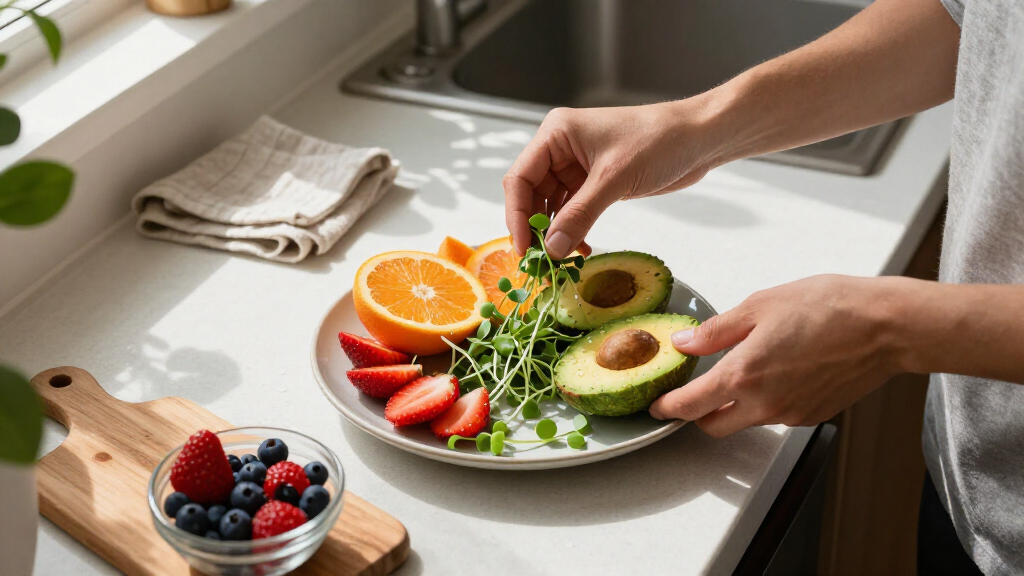
Microgreens are young vegetables and herbs—including radish, kale and broccoli—harvested after their first leaves develop. Environmental Nutrition says some varieties, including amaranth and cilantro, may contain higher levels of certain nutrients, such as beta-carotene and vitamins C, E and K, than their mature forms. Suggested uses include topping salads, soups, grain bowls, tacos and burgers, or blending the greens into dressings and pesto.
Small Additions to Everyday Meals
The report focuses on accessible ways to vary meals rather than presenting fruit or microgreens as a cure or stand-alone health intervention. Whole fruit can add fiber as well as sweetness, and frozen or unsweetened canned options may offer alternatives when fresh fruit is inconvenient or costly. Microgreens can add taste and texture in small amounts, making them an optional way to broaden the ingredients in a meal.
Its distinction between naturally occurring fruit sugars and added sugars may also help readers interpret common nutrition advice. The article says discussions about reducing sugar generally concern sugars added to foods and drinks, such as soda and candy. Individual dietary needs can differ, and the report does not provide personalized nutrition guidance. Its practical takeaway is to use a range of fruit forms and treat microgreens as a complement to other vegetables.
As an affiliate, we earn on qualifying purchases.
Fruit Advice and Microgreen Claims
The source is a Seniors Guide article presenting material from Environmental Nutrition, an independent nutrition newsletter, and distributed by Tribune Content Agency. Its fruit section describes a broad category that includes fresh, frozen, canned and dried fruit, as well as juice. The article refers to a recommendation of five to nine servings of fruits and vegetables per day; it does not specify the source or the serving sizes behind that range.
The microgreens section gives a brief definition based on harvest stage: young vegetable and herb plants picked after their first leaves appear, when they are only a few inches tall. Its nutrition comparisons are limited to certain varieties and nutrients. The report does not say that every microgreen has more nutrients than its mature counterpart, nor does it suggest that microgreens can replace full portions of vegetables.
“Think of microgreens as a flavorful add-on to your meals.”
— Environmental Nutrition, in the Seniors Guide report
As an affiliate, we earn on qualifying purchases.
Limits of the Nutrition Evidence
The report does not provide study citations, sample sizes or specific nutrient measurements for its comparison of microgreens with mature plants. It says certain varieties may contain higher levels of selected nutrients, but readers cannot infer from the article that all microgreens are more nutrient-dense or that eating them produces a particular health result. The cited links between watermelon’s lycopene and health outcomes are also presented broadly rather than with details about the underlying evidence.
The article does not identify the source for its five-to-nine-serving recommendation or define what counts as a serving. It also offers general information, not guidance tailored to people with specific health conditions, dietary restrictions or nutrition needs. The source material gives no publication date, so the precise timing of the report is unclear.
As an affiliate, we earn on qualifying purchases.
Using the Guidance at Home
The report offers practical options rather than announcing a new policy, study or formal dietary guideline. Readers can apply its suggestions by adding whole fruit to meals, comparing labels on canned fruit for added sugars or syrups, and using small amounts of microgreens as toppings or ingredients. For juice, the article’s stated advice is to choose 100% juice and keep intake to no more than eight ounces daily.
No follow-up research, official review or further action is announced in the source. The nutrition comparisons and serving guidance should be read within the limits described in the report; people seeking advice for individual dietary needs can consult a qualified health professional.
As an affiliate, we earn on qualifying purchases.
Key Questions
What are microgreens?
Microgreens are young vegetables or herbs, such as radish, kale and broccoli, harvested after their first leaves appear.
Can microgreens replace vegetables?
No. The Environmental Nutrition report says microgreens can boost a meal as an add-on but should not replace full servings of vegetables.
Does the report recommend whole fruit or juice?
It recommends choosing whole fruit most of the time because juice lacks much of the fruit’s fiber. For occasional juice, it advises 100% fruit juice and no more than eight ounces a day.
Are canned and frozen fruit included?
Yes. The report describes canned and frozen fruit as nutritious options when they have no added sugars, sauces or syrups.
Does every microgreen have more nutrients than mature vegetables?
The report does not make that claim. It says certain varieties may have higher levels of some nutrients than their mature counterparts; it gives no universal comparison or detailed study data.
Source: rss