TL;DR
Nottingham Trent University researchers and Integrated System Technologies Ltd developed a home-monitoring prototype combining radar, thermal sensors and smart plugs. In a mock domestic environment, combining the sensor data improved activity-recognition performance, but the study does not establish real-world emergency detection accuracy or show that the system is ready for deployment.
Nottingham Trent University researchers and technology company Integrated System Technologies Ltd have developed a prototype that combines radar, thermal sensors and smart plugs to monitor activity at home, with the aim of identifying possible emergencies and changes in daily routines. In tests in a mock domestic environment, the researchers found that combining data from the sensors improved performance, but the study does not establish how accurately the system detects health emergencies in people’s homes.
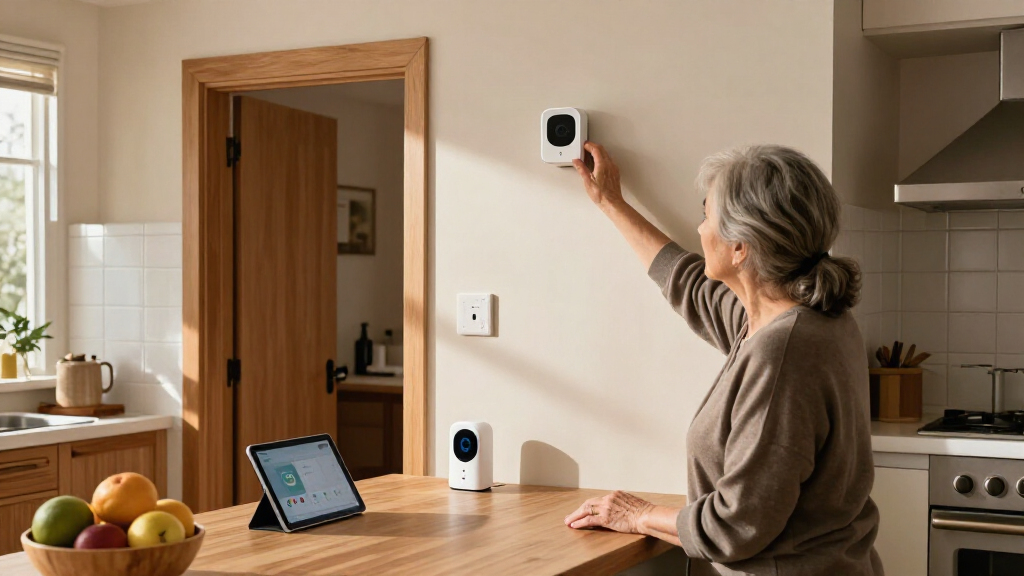
The system uses millimeter-wave radar to detect movement, thermal sensors to identify broad postures such as sitting, standing, walking and lying down, and smart plugs to monitor appliance use. The researchers say the combination could help the system recognize patterns linked to everyday activities, including making tea or preparing food. Its artificial intelligence is designed to learn an individual’s routines and flag activity that differs from them.
The team tested the technology in a simulated home setting with six room layouts, including bedrooms and living areas arranged with different furniture. Participants carried out a series of activities so researchers could assess whether the system could recognize movement and posture. The reported finding was that using all three sensor types together improved performance compared with relying on them separately; the source report does not provide specific accuracy figures.
If an emergency were identified, the proposed system would notify care professionals or family members, who could check on the resident remotely or in person. The researchers also describe possible alerts for longer-term changes, such as reduced mobility, prolonged inactivity, altered sleep or missing household routines. These are proposed uses, not outcomes shown in a trial of older adults living independently.
How Home Alerts Could Support Care
The research addresses a practical challenge for older people who want to remain at home: receiving help when something goes wrong without needing continuous in-person observation. A system that can flag unusual activity could give relatives or care workers a reason to check in, while routine information might help identify changes that warrant attention. Those benefits remain potential rather than proven by this study.
Privacy is a central part of the design. The researchers say the thermal output is kept at low resolution and does not show facial features or personal identity, while radar and appliance-use data are intended to track activity without cameras or wearable devices. Even so, the report does not detail how data would be stored, who could access it, or how residents would give and withdraw consent. Those issues matter because monitoring inside a home involves sensitive information about everyday life.
The technology would also need to be dependable before caregivers could rely on it. Missed alerts could leave an emergency unnoticed, while false alarms could prompt unnecessary checks. The published test establishes that combining sensors improved activity-recognition performance in the study setting; it does not show that alerts would improve health outcomes or allow people to stay at home longer.
elderly home emergency sensor system
As an affiliate, we earn on qualifying purchases.
As an affiliate, we earn on qualifying purchases.
From Sensor Prototype to Home Use
The study, titled “Privacy-Preserving Ambient Sensing for Activities of Daily Living: Multimodal Radar-Thermal Human Activity Recognition and Smart Plug Appliance Recognition,” was published in the journal Sensors in 2026. The research involved Nottingham Trent University’s School of Architecture, Design and the Built Environment and School of Science and Technology, alongside Integrated System Technologies Ltd.
Rather than using one device to identify a specific event, the prototype combines information about movement, posture and household appliance use. The team’s rationale is that these signals can contribute different clues about what someone is doing. According to the report, the AI learns patterns over time, so a deviation from an individual’s usual routine could be flagged for review.
The reported evaluation took place in a mock domestic environment, not in a long-term study of residents’ homes. The article does not say that the system was tested during actual falls, heart attacks or strokes, or that it has received regulatory approval or is commercially available. Dr. Yangang Xing, the lead researcher, described the project as technology intended to support older adults who want to remain in their own homes.
“This technology aims to support the growing number of older adults who wish to remain in their own homes for longer, rather than moving into residential care.”
— Dr. Yangang Xing, lead researcher at Nottingham Trent University
home activity monitoring sensors for seniors
As an affiliate, we earn on qualifying purchases.
As an affiliate, we earn on qualifying purchases.
Real-World Accuracy Still Unknown
The available report does not give numerical results for recognition accuracy, the number of participants, or how often the system produced false alarms or missed activities. It also does not describe tests involving actual medical emergencies or a prolonged deployment in older people’s homes. As a result, real-world reliability is not established.
Other open questions include how the system would distinguish a harmless change in routine from a health concern, how quickly an alert would reach someone, and what would happen if a sensor or internet connection failed. The report also does not specify costs for installation and ongoing use, data-retention policies, or whether residents would control which people receive alerts.
smart home sensors for elderly care
As an affiliate, we earn on qualifying purchases.
As an affiliate, we earn on qualifying purchases.
Further Testing Before Wider Use
The study establishes a prototype and reports that combined sensor inputs performed better in the mock-home tests. The source report does not announce a launch date, a wider trial or a plan for commercial availability. Before the system could be relied on in homes, further evaluation would need to test it with residents in everyday settings and report performance across a range of activities and living arrangements.
Readers should watch for details of any follow-up trials, including how researchers measure missed events and false alerts, how participants’ privacy is protected, and whether alerts lead to timely checks. Until such results are available, the technology is best described as a research-stage monitoring system, not a proven emergency service or a replacement for care.
As an affiliate, we earn on qualifying purchases.
Key Questions
What does the home sensor prototype monitor?
It combines radar for movement, low-resolution thermal sensing for broad body posture, and smart plugs that track appliance use. The system is designed to learn patterns in everyday activity.
Did researchers test it in older people’s homes?
The reported tests took place in a mock domestic environment with six room layouts. The report does not describe a long-term trial in older residents’ homes.
Can the system detect heart attacks or strokes?
The researchers identify heart attacks, strokes, falls and other critical illnesses as possible events the system aims to flag. The reported study does not establish that it can reliably detect those emergencies in real-world use.
Does the study show that the system helps older people live independently longer?
No. Supporting independent living is the researchers’ stated aim. The reported testing assessed activity recognition in a simulated setting and did not measure whether the technology extends independent living.
Source: rss